
Hygge in Reception Case Study
"I Felt Like I Was Failing Every Day" — How Hygge in the Early Years Transformed My Teaching
One of the things I hear most often from educators is this:
"I love teaching, but I'm exhausted."
"I feel like I'm constantly rushing."
"No matter how much I do, it never feels enough."
If you've ever felt that way, you're not alone.
Today's story comes from a Reception teacher who discovered Hygge in the Early Years at a point when she was feeling overwhelmed by the pace and pressure of modern education.
What happened next transformed not only her classroom, but her confidence, wellbeing and joy in teaching.
Looking For Something Different
It all started with a book.
I was reading The Little Book of Hygge by Meik Wiking and became fascinated by the Danish concept of hygge.
The idea that we could create environments centred around comfort, connection, wellbeing and belonging felt completely different from the messages I was hearing elsewhere in education.
I started researching online and discovered Hygge in the Early Years.
Something immediately resonated.
For the first time in a long time, I felt excited.
Excited that there might be another way.
A way that felt more aligned with the reasons I became a teacher in the first place.
I shared my ideas with my Headteacher and colleagues and slowly began making changes to my classroom.
And something unexpected happened.
My energy returned.
Instead of feeling overwhelmed, I felt inspired.
Instead of constantly chasing the next thing, I felt excited to teach again.
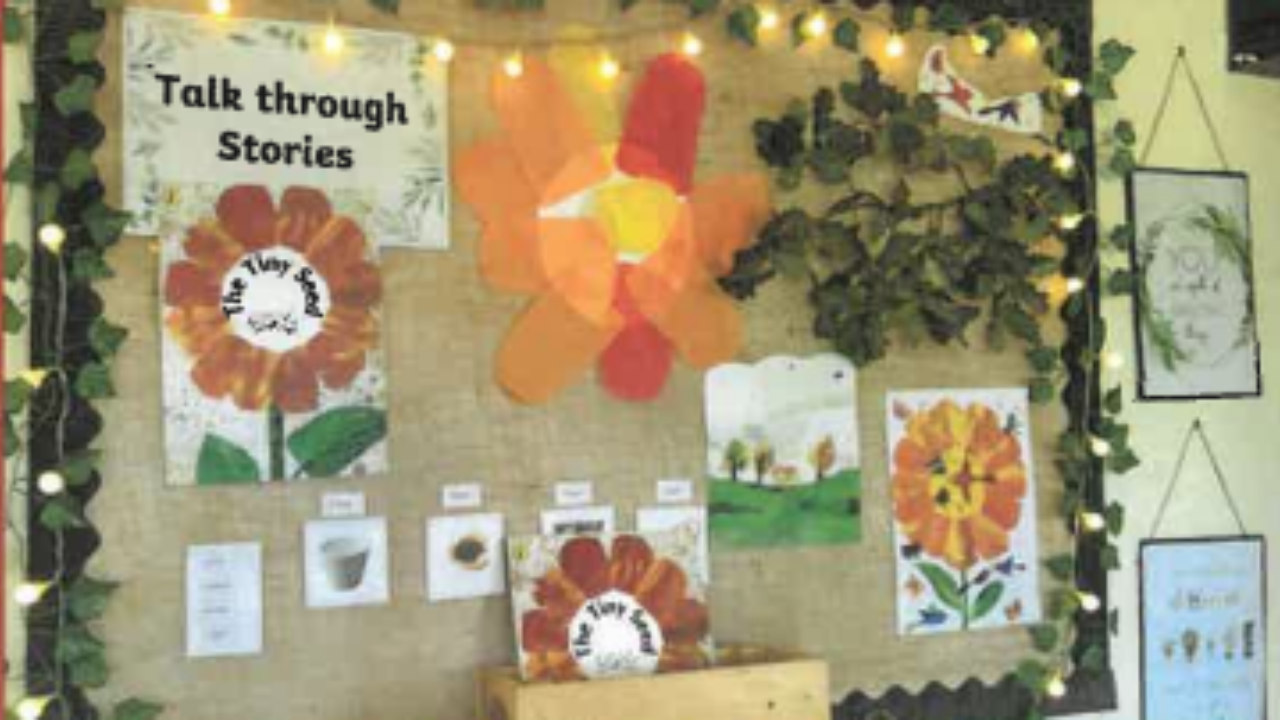
The Classroom Began To Feel Different
One of my favourite things now is hearing people walk into the classroom and say:
"It feels so calm in here."
"It feels cosy."
"It feels different."
Because it does.
The atmosphere changed.
The children changed.
And perhaps most importantly, I changed.
I became less focused on rushing children through activities and more focused on understanding them.
I stopped creating learning experiences for children and started creating them with children.
One day, a child arrived carrying a collection of feathers they wanted to add to one of our provocations.
And in that moment something clicked.
This wasn't my classroom.
It was theirs.
This wasn't my learning journey.
It was ours.
The children weren't passive participants in learning.
They were co-creators of it.
Behaviour Didn't Magically Disappear—But Everything Changed
Like many teachers, there have been times when behaviour has felt challenging.
Children arrive carrying so much.
Big feelings.
Big experiences.
Big emotions.
But what Hygge helped me realise was this:
The environment matters.
The atmosphere matters.
The relationships matter.
A calm environment doesn't solve every challenge.
But it creates the conditions where children feel safer, more secure and more able to regulate.
For some children, school may be the calmest part of their day.
The most predictable.
The most nurturing.
And that realisation changed how I viewed my role.
The Lesson I Didn't Expect To Learn
One of the biggest surprises wasn't what Hygge did for the children.
It was what it did for me.
Before this training, I constantly felt under pressure.
Pressure to fit everything in.
Pressure to cover more.
Pressure to do more.
And because I'm not naturally confident, I often finished the day feeling like I'd failed.
There was always something left undone.
Something I hadn't managed to fit in.
Something I felt guilty about.
The training helped me realise that maybe the problem wasn't me.
Maybe the problem was the expectation that everything had to be done at speed.
For the first time, I embraced slow learning.
And everything shifted.
The Children Became More Engaged
One of the most noticeable changes was the quality of children's play.
Long periods of uninterrupted continuous provision transformed the classroom.
Children's ideas became richer.
Their imagination deepened.
Their conversations became more complex.
Instead of moving quickly from one activity to another, they became immersed.
They built worlds.
Created stories.
Solved problems.
Negotiated with friends.
I spent less time managing and more time connecting.
Less time directing and more time observing.
And I got to know the children far more deeply.
It Changed My Life Beyond The Classroom Too
The impact didn't stop at school.
I found myself slowing down at home too.
I started gardening.
Spending more time outdoors.
Taking time to notice nature.
Making a cup of tea and reflecting on the positives from the day instead of focusing on what I hadn't achieved.
It was a small change.
But a powerful one.
And it reminded me that wellbeing isn't something we teach children.
It's something we model.
The Reception Year I Want Children To Remember
When children leave my classroom, I don't want their strongest memory to be a worksheet.
Or a phonics score.
Or a target they achieved.
I want them to remember how they felt.
Safe.
Valued.
Known.
Supported.
I want them to remember Reception as a place where they belonged.
A place where their curiosity mattered.
A place where they were allowed to be children.
And I hope the skills they developed—curiosity, resilience, creativity, cooperation and confidence—stay with them long after they've left my classroom.
Because those are the skills that truly prepare children for life.
Does This Sound Like The Teacher You Want To Be?
If you've ever felt overwhelmed by the pace of modern education...
If you've ever questioned whether there might be another way...
If you've ever gone home feeling exhausted despite giving everything to your children...
I'd love to invite you to join my free training.
🌿 FREE TRAINING: 3 Steps to Creating a Calmer, More Engaged Early Years Environment
In this free session, I'll show you:
✨ The Scandinavian-inspired principles that transformed classrooms like this one
✨ Why children are becoming increasingly overwhelmed and disengaged
✨ How to create calmer environments without adding more to your workload
✨ Practical strategies that support behaviour, wellbeing and deep play
✨ Why slowing down often leads to better outcomes for both children and educators
Thousands of educators have already joined me and discovered that teaching doesn't have to feel like constant firefighting.
👉 CLICK HERE TO WATCH THE FREE TRAINING
Because sometimes the biggest transformation isn't changing the children.
It's changing the way we see childhood itself. 🤍

Have you tried my FREE Introduction to Hygge Training yet?
A Free 30-Minute Training to Bring Calm Back Into Your Early Years Practice
Environment Audit
Download your Environment Audit Workbook and begin creating calmer days, deeper play and less overwhelm for the year ahead.
