
Really Really Cold Weather Play
Childhood Doesn't Pause for Winter
Somewhere along the way, we've been taught that outdoor play needs ideal conditions.
Dry days.
Mild temperatures.
Perfect resources.
That outdoor play is something we do when it's convenient.
Something we squeeze in when the weather allows.
Yet after more than 20 years working in early years education, visiting hundreds of settings, studying Scandinavian approaches to childhood and watching children in nature across every season, I've come to believe something very different.
Children don't experience the world that way.
The weather isn't a barrier to play.
It's part of it.
What Canada Reminded Me About Childhood
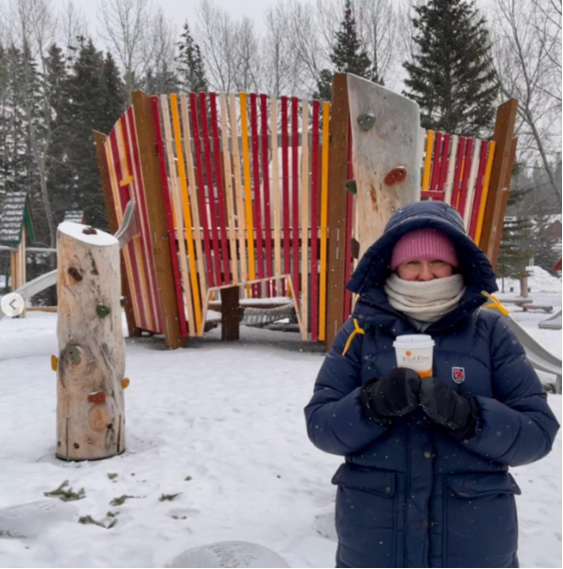
This January, we spent time in Canada as a family.
Temperatures regularly reached -22°C.
Friends and family at home couldn't quite believe we were taking a three-year-old outdoors every day.
But we did.
Every single day.
And what struck me most wasn't how the children coped.
It was how they thrived.
As both an early years professional and a mum, I found myself reflecting on how differently many countries view childhood.
In much of the UK, cold weather often becomes a reason to stay inside.
In Scandinavian countries and across Canada, it's viewed very differently.
Children are expected to be outdoors.
To move.
To explore.
To experience the changing seasons with their whole bodies.
And the more I watched, the more I was reminded of something I see repeatedly in my work:
Children need the outdoors more when conditions are challenging, not less.
There Is No Such Thing As Bad Weather...
One of the biggest misconceptions about outdoor play is that it requires perfect conditions.
It doesn't.
It requires preparation.
We dressed for the weather, not the activity.
Merino base layers.
Balaclavas and buffs over cold cheeks.
Trapper hats.
Fleece mid-layers.
Insulated waterproof suits.
Liner gloves beneath mittens.
Snow boots designed for warmth and grip.
Most of our outdoor gear was bought second-hand or in sales and has lasted season after season. We even managed two winters from one snow suit.
As adults, we dressed much the same.
And yes — large pockets become surprisingly important.
The Learning Starts Before You Even Leave The House
One thing that fascinates me about Scandinavian and Finnish approaches to outdoor learning is that getting ready is viewed as part of the learning itself.
Children learn to assess conditions.
To become increasingly independent.
To understand their bodies.
To manage risk.
To develop resilience.
Putting on snow boots.
Fastening zips.
Pulling on mittens.
Working out what they need to stay comfortable.
All of this matters.
In Finland, children spend time outdoors daily, regardless of the weather.
Not because adults are trying to build resilience through hardship.
But because they recognise that children learn through experiencing the real world.
What Children Really Need Outside
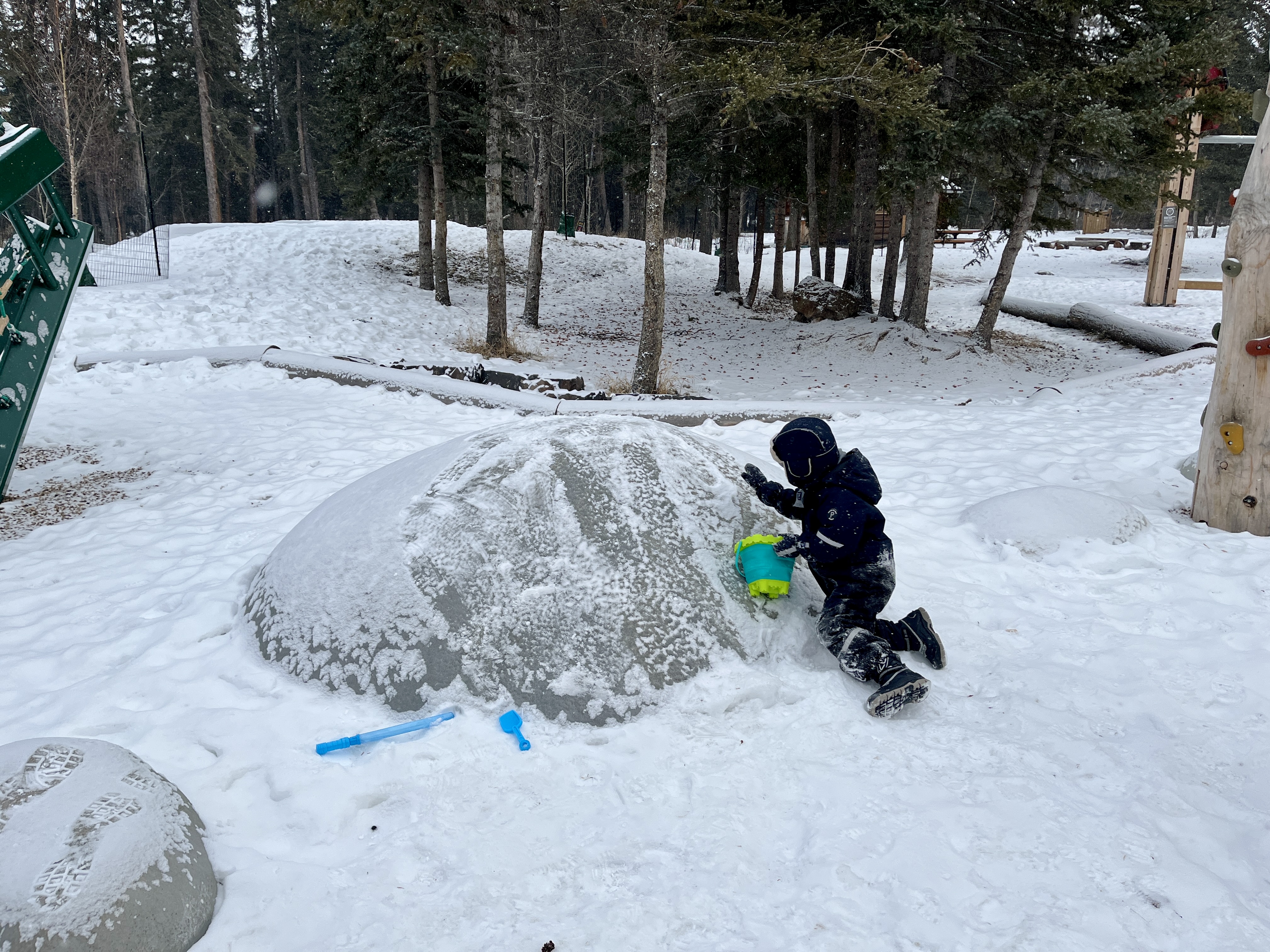
When we headed outdoors, we took very little.
A bucket.
A spade.
Sometimes some bubbles.
That was about it.
The environment provided everything else.
Snow castles.
Animal tracks.
Snow tunnels.
Frozen puddles.
Clearing slides.
Racing snowballs.
Skimming them across frozen lakes.
Transporting enormous snowballs.
Sledding.
Digging.
Climbing.
Pushing.
Pulling.
The kind of heavy work and full-body movement that so many children are craving.
The kind of movement that supports regulation, coordination, confidence and wellbeing.
And perhaps most importantly...
Joy.
The Missing Piece In Many Conversations About Behaviour
In my work, I often hear educators talk about children who seem unable to settle.
Children who struggle to focus.
Children who seek constant movement.
Children who appear dysregulated.
Yet when we look more closely, many of these children are spending less time outdoors than previous generations.
Less time climbing.
Less time running.
Less time managing risk.
Less time experiencing the sensory richness that nature provides so effortlessly.
Outdoor play isn't simply an "extra".
It's a biological need.
For many children, movement is regulation.
Nature is regulation.
Fresh air is regulation.
And winter doesn't change that.
Childhood Doesn't Pause For Winter
One of my strongest memories from Canada wasn't the snow.
It was the parks.
Families wrapped up warm.
Children playing.
People outdoors together.
Life continuing despite the cold.
Because childhood doesn't pause for winter.
And play doesn't need perfect conditions.
It needs opportunity.
It needs permission.
And it needs adults who are willing to see beyond the weather forecast.
Want to Create a Calmer, More Engaged Early Years Environment?
If you're interested in Scandinavian-inspired approaches to childhood, outdoor play, wellbeing and creating environments where children truly thrive, I'd love to invite you to watch my free training:
🌿 3 Steps to Creating a Calmer, More Engaged Early Years Environment
In this free session, I'll share:
✨ Why many children are struggling with regulation and engagement
✨ The simple shifts that create calmer, more connected learning environments
✨ Scandinavian-inspired approaches that support wellbeing and deep play
✨ Practical strategies you can implement immediately in your setting
👉 Watch the free training here: https://www.hyggeintheearlyyears.co.uk/blank-page-c59b8933-2688-43eb-8483-215520b9c3ac
Because sometimes the answer isn't more activities.
It's giving children what they have always needed.
Time.
Movement.
Connection.
And the freedom to experience the world in every season.
Have you tried my FREE Introduction to Hygge Training yet?

Online Conference
Online Conference
Curious about slow pedagogy?
”The Unhurried Child"
21st November 2026 (48 hour access)
A slower, more connected whole child approach to early childhood.
One inspiring online conference for educators ready to protect play, nurture wellbeing and give childhood back it's time.
