
Slow Pedagogy
✨ What If Slowing Down Was the Most Powerful Thing You Could Do for Children? ✨
In a world that celebrates speed, productivity and packed timetables, choosing to slow down can feel almost rebellious.
But what if slowing down wasn’t falling behind…
What if it was the most powerful thing you could offer the children in your care?
Inside my Hygge in the Early Years™ Training, one of the most transformative modules is devoted entirely to slowing down your teaching. Not because we need to do less — but because we need to do what truly matters, more deeply. Why not watch my FREE 30 Minute Training Here
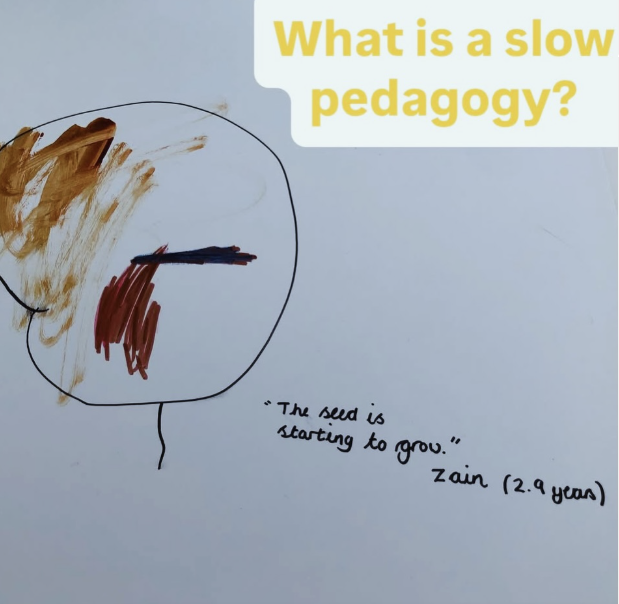
What Is Slow Pedagogy?
Slow pedagogy is not about abandoning intention or lowering expectations.
It is about:
-
Letting go of the constant pressure to “move on”
-
Resisting the urge to interrupt deep play
-
Releasing the need to rush children toward outcomes
-
Creating space for thinking, wondering, and lingering
It is grounded in many reflective approaches to education — from the child-led philosophy of Reggio Emilia approach to the calm, relationship-centred principles of Nordic early years practice.
But slow pedagogy is not a trend or a method.
It is a way of being.
What Does It Look Like in Practice?
A slow pedagogy:
🌱 Honours the time it takes to truly listen
Instead of responding quickly, we pause. We sit beside. We allow children’s thoughts to unfold fully.
🌱 Respects children’s pace — not the clock
Not every moment needs to be rushed toward the next transition. Sometimes the richest learning happens in the in-between.
🌱 Creates space for wonder
A snail discovered in the garden becomes an hour of fascination. A shadow on the wall becomes a story. We don’t need to hurry them back inside.
🌱 Values depth over display
Rather than producing endless themed outputs, we focus on experiences that children can return to again and again — building mastery, confidence, and meaning.
What Happens When We Slow Down?
Something shifts.
Children become:
-
More absorbed
-
More imaginative
-
More articulate in their thinking
-
More emotionally regulated
They show us just how capable they are when given time.
And quietly — something shifts for us too.
The noise reduces.
The urgency softens.
We feel more present.
Many educators tell me that embracing slow pedagogy doesn’t just transform their classroom — it transforms them.
The Cost of Constant Rush
Modern childhood is often filled with excess:
-
Excess resources
-
Excess transitions
-
Excess adult direction
-
Excess noise
But depth rarely grows in excess.
It grows in stillness.
This is something I reflect on often — both in my professional work and in my own motherhood. When I resist filling every moment, I see more creativity, more problem-solving, more joy. Children do not need us to speed them up.
They need us to protect their time.
A Gentle Reset
If you’re feeling:
-
Overstimulated by constant planning
-
Tired of chasing outcomes
-
Pulled between paperwork and presence
-
Longing for more connection in your practice
Slow pedagogy may be the reset you didn’t realise you needed.
Inside Hygge in the Early Years™ Training, we explore:
✨ The philosophy behind slowing down
✨ Practical shifts you can make immediately
✨ Reflective journaling to deepen your understanding
✨ Creating calm, intentional environments that support deep play
It is not about ticking another CPD box.
It is about transformation.
An Invitation
If this way of teaching speaks to you — if you’re craving less rush and more connection — you are warmly invited to explore the training.
✨ A gentle reset for your practice.
✨ A calmer way of being with children.
✨ A return to what truly matters.
One of the biggest lessons Hygge has taught me is that children often need less than we think they do.
Less planning.
Less rushing.
Less adult direction.
If you'd like to discover how I use Hygge to create calm, connection and deep learning without constantly doing more, I'd love to invite you to watch my FREE 30-minute training.
Because sometimes…
Slowing down isn’t a luxury.
It’s leadership.
Have you tried my FREE Introduction to Hygge Training yet?
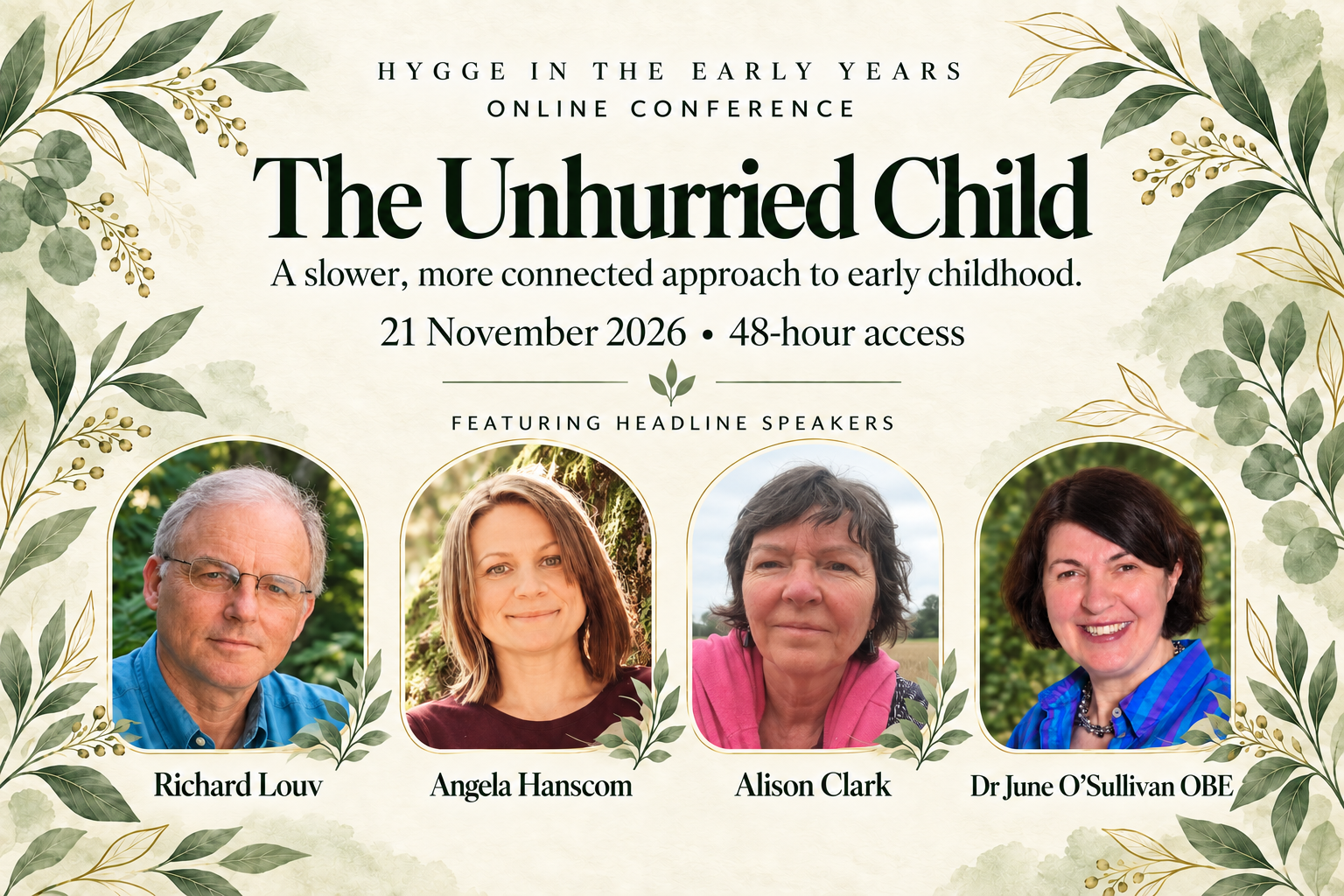
Online Conference
Online Conference
Curious about slow pedagogy?
”The Unhurried Child"
21st November 2026 (48 hour access)
A slower, more connected whole child approach to early childhood.
One inspiring online conference for educators ready to protect play, nurture wellbeing and give childhood back it's time.
