
Provocations Not Working?
Angie shared something with me this week that I haven't stopped thinking about.
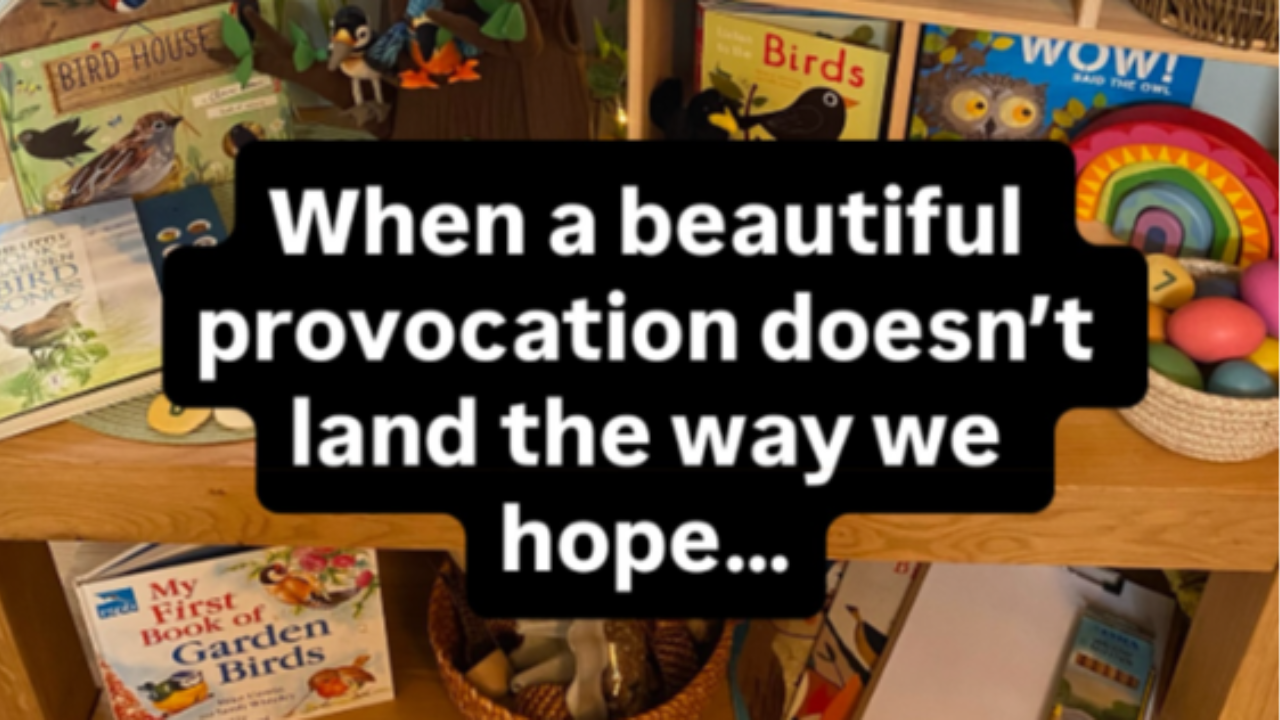
She had carefully created a beautiful basket of bird resources for her children.
There were books, identification cards, small bird figures and photographs — thoughtfully chosen to spark curiosity after seeing me share a similar idea online.
She placed them out with excitement.
Within minutes, the birds were in pockets.
Some had disappeared under cushions.
One had been fought over.
A book had been damaged.
Several resources were torn.
Only one child sat and truly engaged with what had been provided.
After 15 years working in early years, Angie said something that felt incredibly honest:
"I've never had this before. I'm running out of ideas and it's making me sad."
And I suspect many practitioners reading this will recognise that feeling.
Not because they're doing anything wrong.
But because something feels different.
When What Used to Work No Longer Works
Over the years I've visited hundreds of early years settings.
I've seen beautifully curated invitations to play.
I've seen children spend hours immersed in open-ended resources.
But recently, more and more practitioners are sharing similar experiences.
Resources being thrown.
Books being damaged.
Children flitting rapidly between activities.
Little sustained engagement.
And often, a growing sense of frustration from educators who are trying their absolute best.
It's easy to look at these moments and wonder:
"Am I doing something wrong?"
But perhaps that's the wrong question.
What If The Children Are Telling Us Something?
This isn't about naughty children.
It's not about poor practice.
It's not about educators failing.
It's a really honest window into what some children may need right now.
✨ Some children are carrying a deep need for movement.
✨ Some are seeking heavy work, pressure and sensory input.
✨ Some are exploring through impulse rather than intention.
✨ Some have had very little experience of slowing down and caring for resources.
✨ Some are finding the demands of modern childhood overwhelming.
And when that's the case, a beautiful book basket can feel overwhelming rather than inviting.
I often think about this when I visit settings.
Sometimes we see an inspiring idea online and immediately want to recreate it.
I've done exactly the same myself.
But what works for one group of children won't necessarily work for another.
Our role isn't to replicate someone else's environment.
Our role is to understand the children in front of us.
Sometimes We Need To Go Back To Basics
When children are struggling to engage with delicate, open-ended resources, the answer isn't always more invitations.
Sometimes it's less.
Sometimes it's slower.
Sometimes it's asking different questions.
• How do we care for shared things?
• What does "gentle hands" actually look like, feel like and sound like?
• Do children need tougher, more robust resources right now?
• Is the environment asking for calm when their bodies are asking for movement?
• Have we built enough opportunities for connection, belonging and regulation before expecting deep engagement?
There is no failure in stepping back.
No shame in simplifying.
No loss in recognising that this cohort may need something different.
In fact, that's what responsive practice looks like.
A Lesson I've Learned Again and Again
One of the biggest lessons Hygge has taught me is that children don't thrive because we create beautiful environments.
They thrive because they feel safe, connected and understood within them.
The environment matters.
The resources matter.
But relationships matter most.
When children feel calm enough to engage, care for and value what is around them, those beautiful invitations begin to work.
Not because we've forced it.
But because we've created the conditions for it.
If This Resonates With You...
If you've ever found yourself wondering why children aren't engaging with the resources you've lovingly prepared...
If you've felt exhausted trying more and more ideas...
If you've questioned whether you've somehow lost your touch...
Please know you're not alone.
This is exactly why I created my free training:
🌿 3 Steps to Creating a Calmer, More Engaged Early Years Environment
In this free training, I share the simple Scandinavian-inspired shifts that help children feel calmer, more connected and more able to engage deeply in play and learning.
You'll discover:
✨ Why behaviour and engagement challenges are often symptoms, not problems
✨ How to create an environment that supports regulation and connection
✨ The small changes that can have the biggest impact on children's wellbeing and learning
✨ Why doing less is often more powerful than doing more
You can watch the free training here:
👉 https://www.hyggeintheearlyyears.co.uk/blank-page-c59b8933-2688-43eb-8483-215520b9c3ac
Because sometimes children aren't asking us for more activities.
They're asking us for something much simpler.
Connection.
Understanding.
And a different path forward.
And if something that once worked suddenly doesn't, it doesn't mean you've lost your way.
It might just mean the children are asking you to walk a slightly different path with them. 🤍
Have you tried my FREE Introduction to Hygge Training yet?
Online Conference
Online Conference
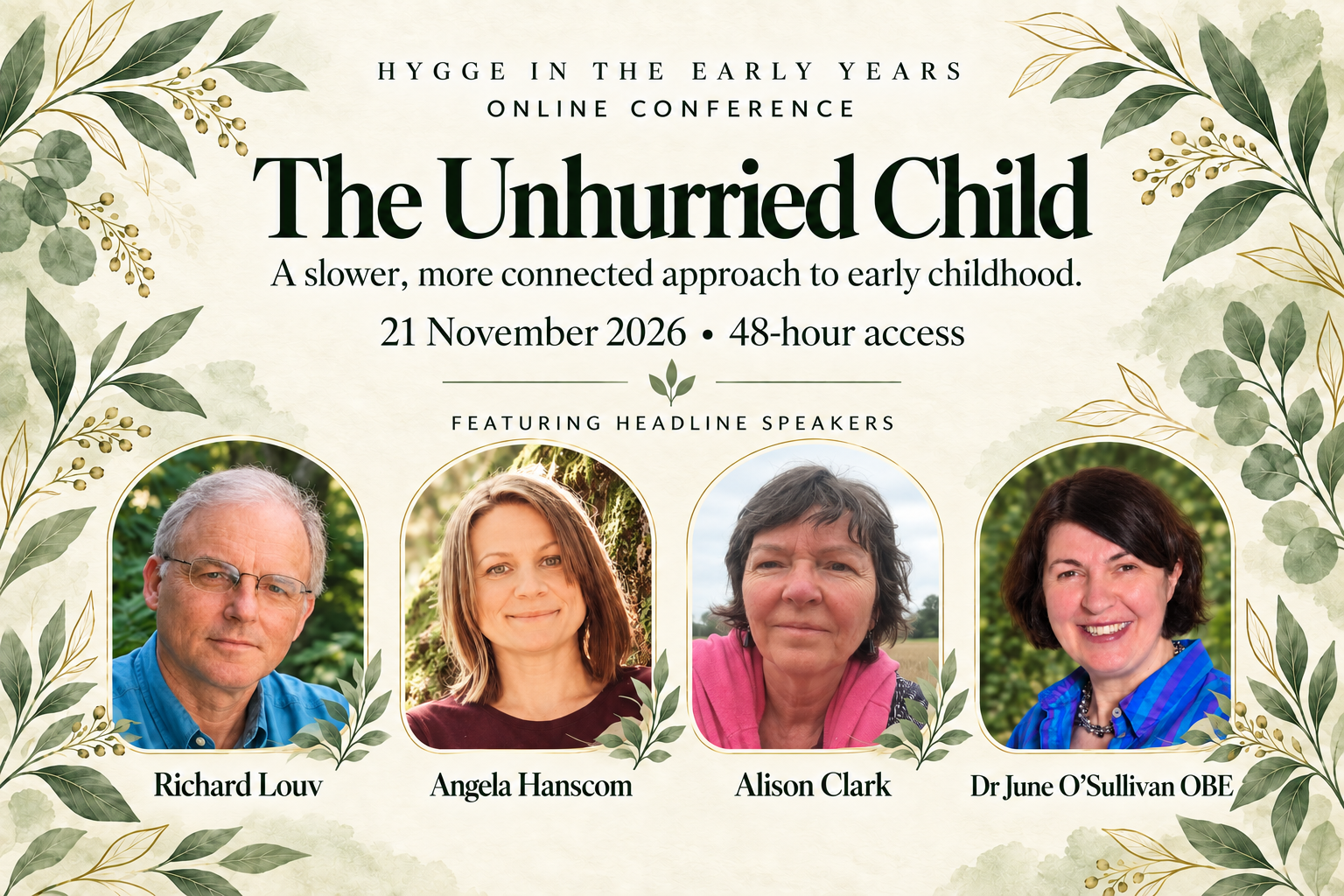
Curious about slow pedagogy?
”The Unhurried Child"
21st November 2026 (48 hour access)
A slower, more connected whole child approach to early childhood.
One inspiring online conference for educators ready to protect play, nurture wellbeing and give childhood back it's time.
