
What If Writing Didn’t Start With a Worksheet?
Writing Needs Meaning
When we think about early writing, it can be easy to picture children sitting at a table, practising letter formation, tracing over dotted lines or being asked to write words because an adult has decided it is time.
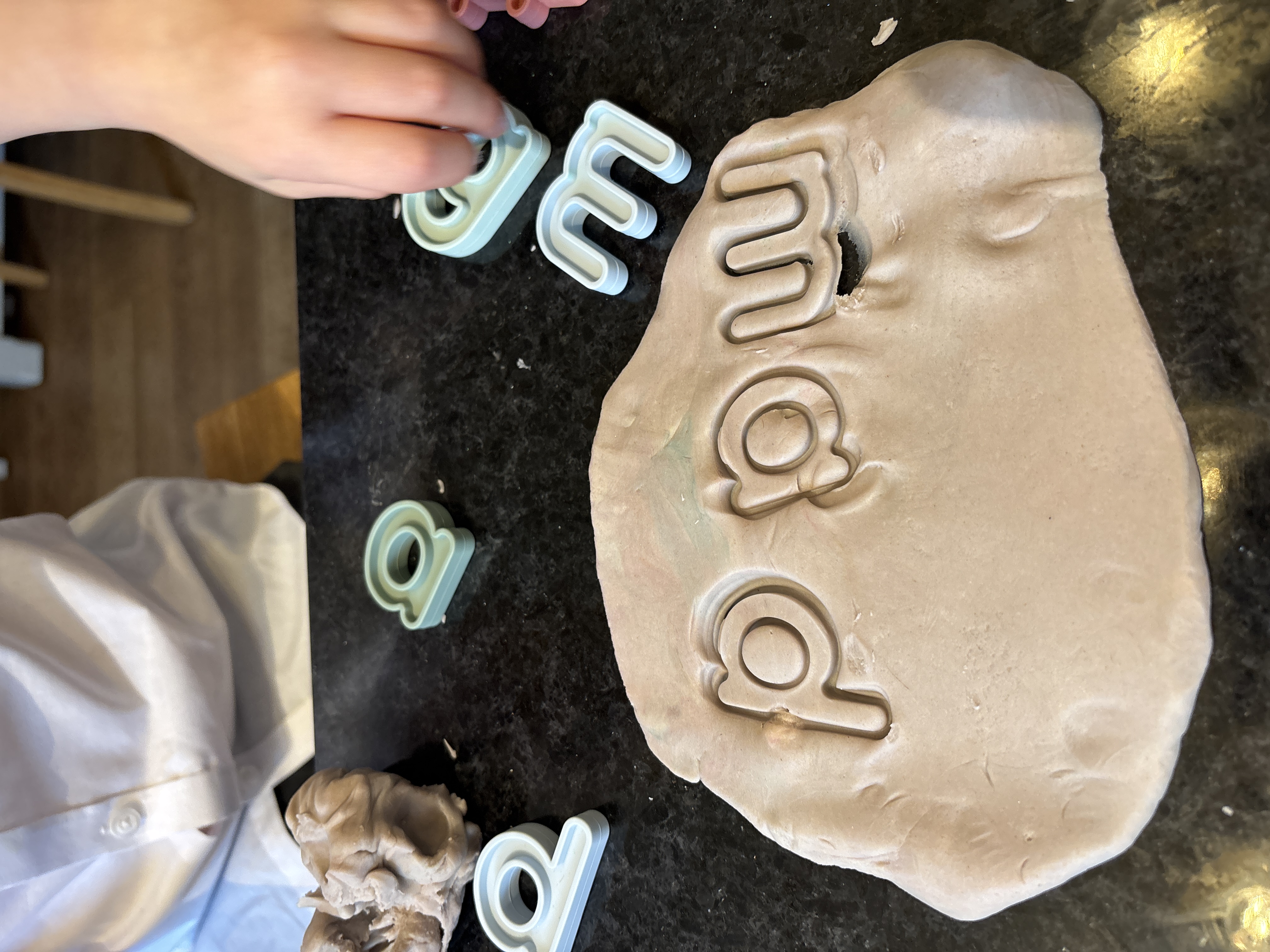
But writing means so much more to young children when it has a purpose.
Writing comes alive when it is connected to play, relationships, movement and real communication.
So how do we make wanting to learn how to read and write feel irresistible?
Bringing Phonics Into Movement
One simple way I loved bringing phonics and early writing to life in my Reception classroom was through movement. For example, placing the letters from CVC words into hoops and encouraging children to jump onto each sound, say it aloud and then orally blend the word together.
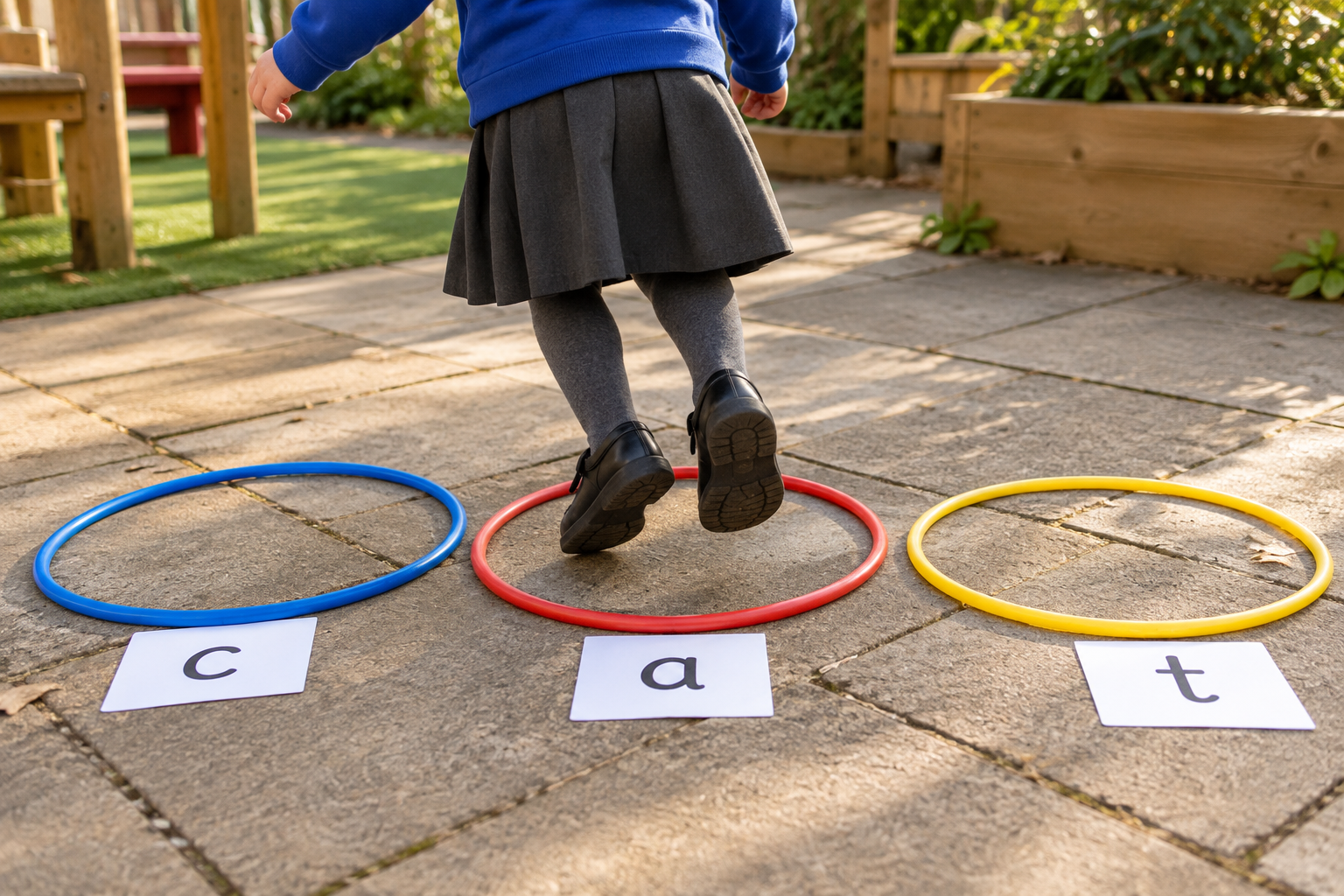
It might look simple, but there is so much happening.
Children are moving.
They are listening.
They are seeing the letters.
They are repeating the sounds.
They are using their whole bodies to learn.
We know young children need movement and repetition. They need to feel things in their bodies, not just hear instructions from an adult. Phonics does not always need to be still, silent or table-based. It can be playful, active and joyful.
Creating A Classroom Post Office
But alongside phonics, we also need to ask:
Do children feel excited to read and write?
Do they see writing as something useful, meaningful and part of real life?
One of my favourite ways to support this was by setting up individual mailboxes in the classroom. Each child had their own little post box or wallet, often with their photograph on the front. The children could write notes, cards, messages and letters to one another, post them into a friend’s mailbox and then check their own to see if someone had written back.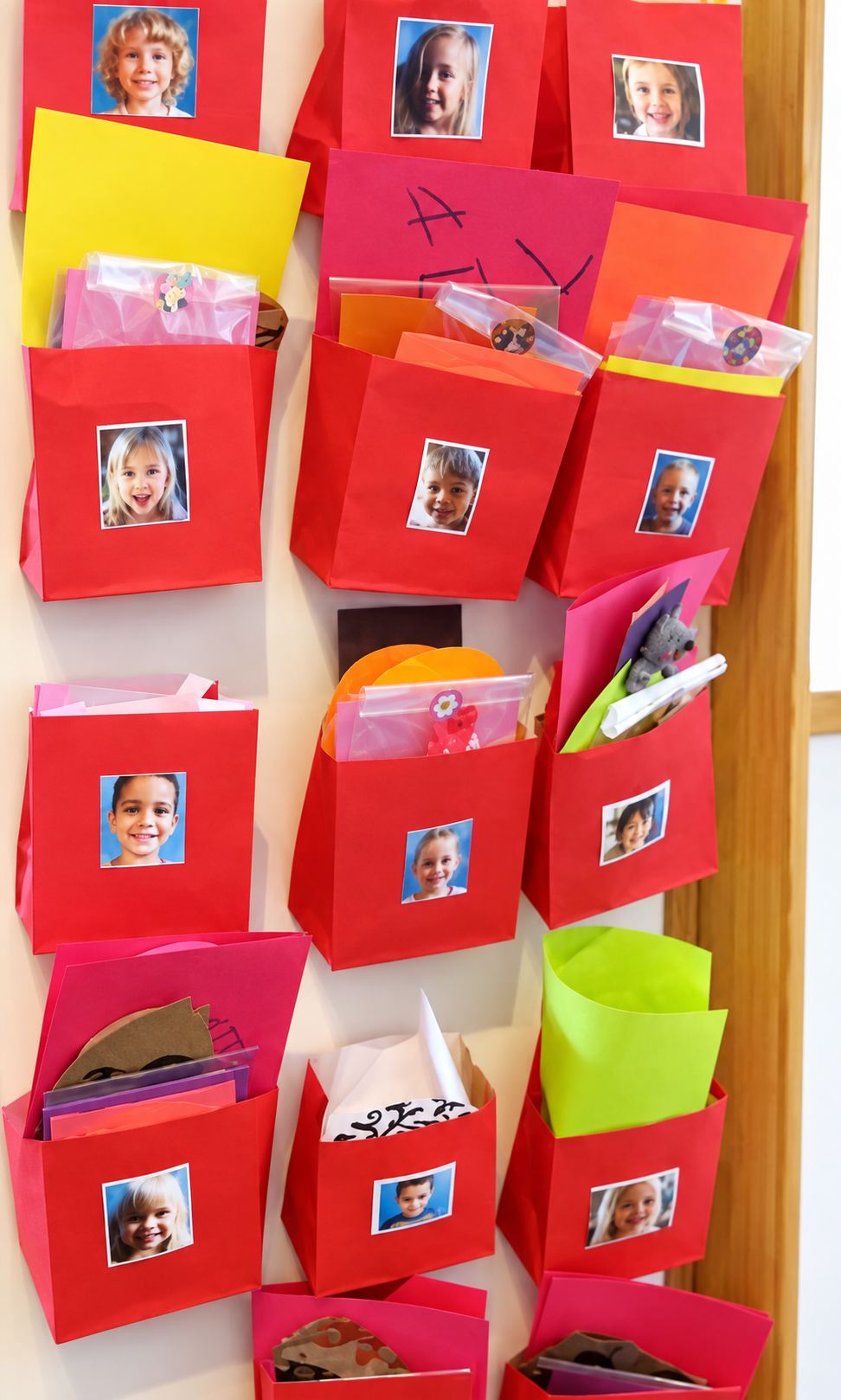
The excitement was beautiful to watch.
Suddenly writing had meaning.
They were not writing because they had been given a worksheet. They were writing because they had something to say. They were writing because they wanted to connect. They were writing because someone might reply.
As part of the provision, we made sure there were envelopes, old stamps, ink pads, stampers, beautiful note paper, postcards, cards and a variety of writing tools. Gel pens, felt tips, pencils and biros all invited children to pick them up and have a go.
Taking Writing Outdoors
This could easily be taken outdoors too.
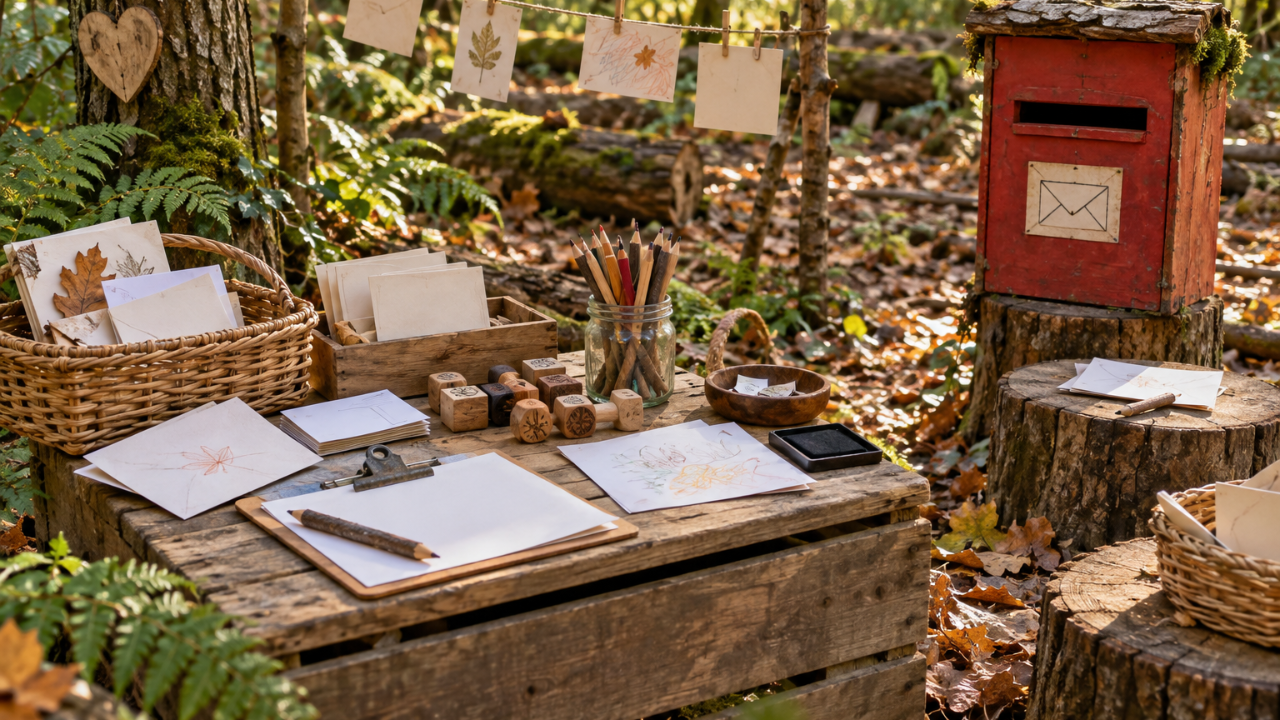
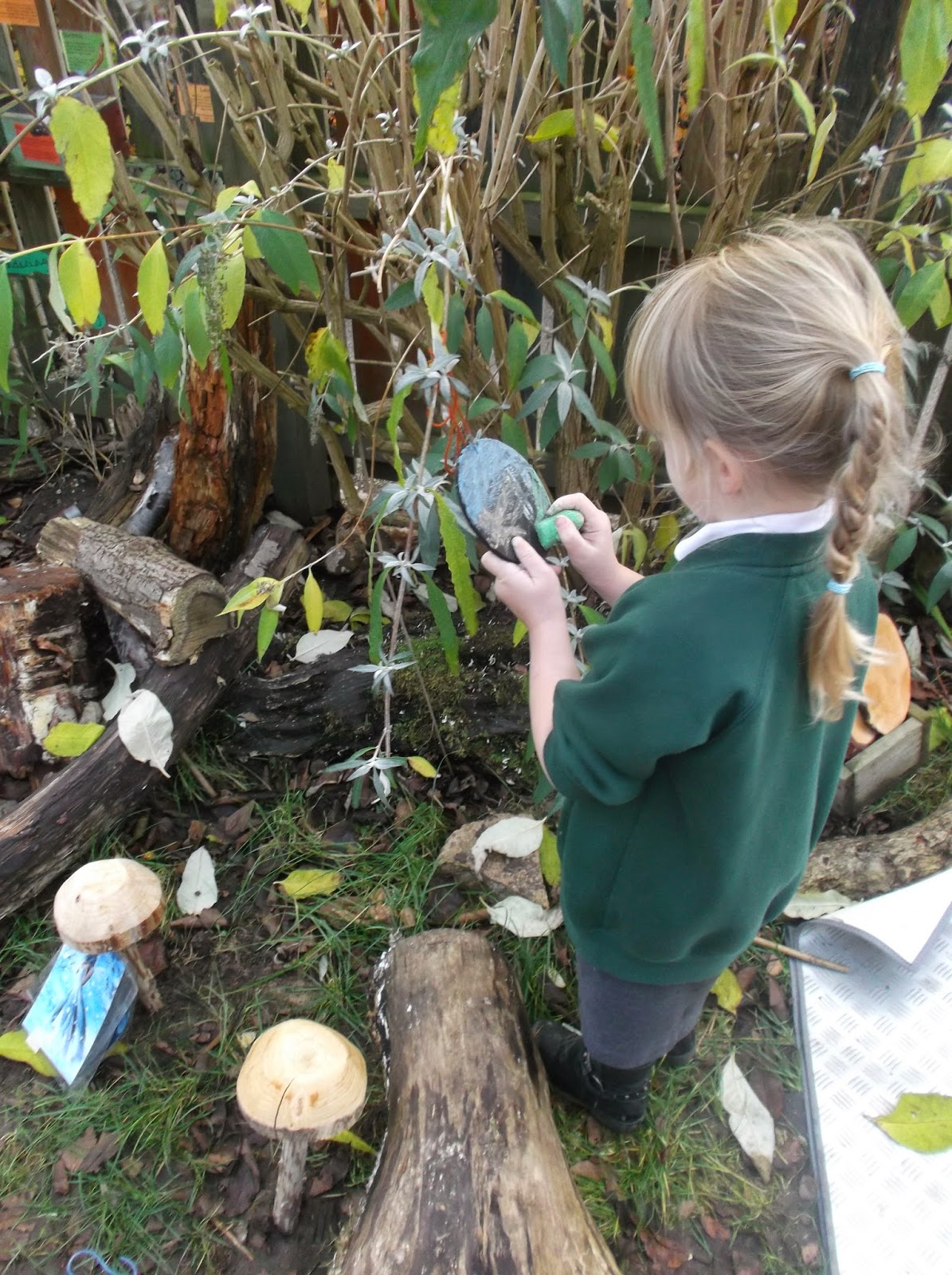
Imagine setting up a woodland post office.
A basket of envelopes hanging from a branch.
Clipboards and pencils under a tree.
Little wooden signs for “post box,” “letters” and “deliveries.”
A writing station made from crates, logs or a tree stump.
Messages posted to friends, fairies, woodland animals or the class puppet.
Children delivering notes around the outdoor area.
Suddenly writing becomes part of adventure.
A child might write a message to the birds.
Another might make a sign for the mud kitchen.
Someone might create a register for the woodland school.
Another might draw a map and add labels.
Some children may write recognisable letters, some may make marks, some may copy names, and some may simply begin with drawings and symbols.
All of it matters.
Because early writing is a journey.
Writing That Grows From Real Life
I’ve been reminded of this so much at home recently too. My little boy has just started Reception and he is really enjoying learning how to write the names of his new friends. He has also started making little registers so he can play schools at home.
And this is exactly what we want to see.
Writing emerging from real life.
Writing linked to relationships.
Writing that has meaning for the child.
He is not writing because he has been handed a worksheet. He is writing because those names matter to him. His friends matter. His play matters. The role he is stepping into matters.
That is where early writing becomes powerful.
The Role Of Adult-Initiated Teaching
Of course, phonics matters. Letter sounds matter. Blending matters. Letter formation matters too. But children also need the wider foundations: motivation, confidence, communication, fine motor strength, story language, vocabulary, relationships and a sense that writing belongs to them.
This does not mean we leave writing development entirely to chance. There is absolutely a place for thoughtful adult-initiated activities where we slow down and focus on the specific skills children need.
Children need adults to model correct letter formation, to show them how letters are shaped, where to start, how to hold and control their pencil, and how to apply their phonics knowledge when they want to write a word.
These moments matter.
They give children the tools, confidence and accuracy they need to flourish as writers. But they are most powerful when they are connected back into meaningful opportunities to use those skills in real life, through play, messages, labels, cards, stories, registers and signs.
Literacy With Heart
When we make literacy playful, purposeful and connected, children begin to see themselves as readers and writers.
They begin to understand that print is not just something adults test them on.
It is something that helps us communicate.
It helps us belong.
It helps us share our ideas with the world.
So if you are looking for a simple way to bring more meaning into phonics and writing, try creating a little post office.
Indoors or outdoors.
In the classroom or in the woods.
With envelopes, notes, names, signs, registers, cards and messages.
Then watch what happens when writing becomes part of the life of the setting.
Because children do not just need phonics in action.
They need literacy with heart.
Join Me For The Unhurried Child
And if this way of thinking resonates with you, then I’d love to invite you to join me for The Unhurried Child Online Conference.
This online conference is for Early Years educators who know that childhood should not be rushed. It is for those of us who want to move beyond worksheet-led learning, tick-box pressure and constant adult-directed tasks, and come back to what young children truly need.
Across the conference, we’ll be exploring slow pedagogy, whole-child development, play, connection, movement, outdoor learning and how to create practice that feels calmer, more intentional and deeply respectful of young children.
If you are ready to protect play, nurture wellbeing and place the whole child at the heart of your practice, I would love you to join us.
Come and be part of The Unhurried Child Online Conference and explore how we can create Early Years practice that gives childhood the time, space and meaning it deserves.
Have you tried my FREE Introduction to Hygge Training yet?
A Free 30-Minute Training to Bring Calm Back Into Your Early Years Practice
Environment Audit
Download your Environment Audit Workbook and begin creating calmer days, deeper play and less overwhelm for the year ahead.
