
Blog
A calmer way to teach, lead and nurture childhood.
Practical ideas, reflective insights and nature-led inspiration for educators who want to do less — and do it more meaningfully.
Start here if...
“It’s rained today and the children have brought mud in with them.”

While visiting a school recently I over heard a Reception teacher panic that the children had brought mud inside the classroom and how the outdoor area needed astroturf laying instead.
That real connection with nature is so important; the mud, the puddles, the wind. This is how we learn about the world around us and is so important in our sensory development. We can’t deny young children of these experiences. In fact in my opinion I believe we need to encourage it more! This is when the real magic of early years learning happens!
To over come the problem of mud inside consider the footwear and clothing the children have to go outdoors in. Perhaps having a welly boot stand? A clothes airer for waterproofs, or a boot wash station? Why not put down a barrier mat in the entrance into the classroom that children can get changed on?
Making a few small changes means we can continue to have wonderful learning opportunities going on every day in nature.
Find out more about our Wand...
“I Think I’m Planning Too Much Enchanted Provision"

You’ve spent all weekend printing, cutting and laminating resources as well as planning what would go in each every of provision for the week. By 10am Monday morning you feel disheartened as the resources are strewn across the classroom or are not being used as you intended.

It’s exhausting isn’t it!? I know because that used to me. Then I realised it didn’t have to be that way.
Once I started planning from the children’s interests and fascinations I saw that the learning just happened in the high quality continuous provision I had already set up. Levels of engagement improved, I saw huge levels of creativity and I rarely got interrupted to support behaviour. I stopped having children wandering around the provision looking lost or disrupting others as they were exploring their own ideas and projects.
This saved me so much time and I could spend time doing things that would actually had an impact on my children. Like planning a woodland walk for the children interested in ba...
"My Children Can't Sit On The Carpet"

Do you find your children struggle to sit on the carpet for group time. Here are some things to consider;
- How long are your adult led sessions?
- Are you breaking children off in the middle of their play to come and sit with you for group time? This might b for things like assembly times.
- How many children are in your group? Could you break up into smaller groups (maybe even groups of 4-5 to start with and slowly increase it.
- Do you plan adult led sessions inside and out to show the importance of learning happening everywhere?
- Have you had a focus on how we can be a good listener? I like to have visual good sitting supports up, use verbal reminders and use makaton signs and actions.
- Are you making your sessions active and irresistible? The use of props, engaging stories, using different voices (e.g quiet whispers at times or showing excitement, action rhymes, creating intrigue and suspense (something discovered in a box)
- Have you planned around the children’s interests and what ...
Mental Health

Natural Treasures
Autumn is the most perfect time of the year to collect natural treasures in the great outdoors.

Some of my favourites that I mention in the Wanderlust Child Nature Journal are;
- Crab apples
- Elderberries
- Rosehips
- Pears
- Acorns
- Ferns
- Pine cones
- Conkers
I like to give children little bags to collect these in and then offer sorting trays, jars and ten frames to explore with once back in setting. You might even give your children a numbered paper bag and ask them to collect the amount on the bag. There are many ways you can then extend this further with the language you use afterwards. How many would we have if we added one more conker to the bag? What happens if we added two bags together? What would happen if an acorn fell out of the bag? How could you sort the natural items you've collected?

How about asking your children and their families to make 100 jars of loose parts? Then ask your children to make their own labels and put these out to use in your loose parts ar...
How often do you allow children to pause?

A curiosity, a day dream or a question... this is often how learning begins. So how often do you allow children to pause? To walk slowly and wonder about the world around them. Offering opportunities to dawdle and see the world for the very first time? We're often so guilty of rushing along and taking children on our own agenda that we forget theirs!
Sometimes we have to remind ourselves that it is the process thats important. Not just when it comes to doing an activity but in life in general. I’ve been thinking about it lots this week. Noticing while in Scotland so many people even rushing to get to the viewpoint on a hike... I must admit I’m more of a dawdler myself and like to take in the small moments of the hike- the wind through the trees, the smell of the pine or the crunch under foot. Young children are very good at stopping, looking and being curious as they walk along. Perhaps we can turn to our children to learn this again from them. The importance of slowness and looking at ...
Little Red Hen

Use Every Opportunity To Learn

‘Put your coat on Joe’
‘Jumper on Evie!’
The weather creates a brilliant way for us to learn key life skills but if we find ourselves just telling children what to do they won’t always understand the why.
Instead we can use experiences as a learning tool. Sometimes we need to let children go outside for a few minutes without a coat in winter but make sure our adult interactions support a learning opportunity here. Talking to the children about the weather, the way the coldness feels on the skin, wondering with the child what they could do to stay warmer. Linking back moments and other experiences. ‘Remember when we went to the farm last week and the wind was blowing and we were so cold. We wished we had our hats on to keep our ears warm!’
I also like to talk about the weather with the children as part of our morning meeting. Checking the weather forecast together and opening up discussions about what to wear, or to predict what might have happened to our puddles outside.
How do you like...
Getting Outside in September!

As the weather starts to change and we move into the Autumn this has to be one of my favourite times of the year to spend time outside with young children. There is just so much to see and discover! Here are a few ideas to get you started...
Go on an autumn walk
Head for a local walk and see what natural treasures can you collect that show you signs of Autumn? You might give children a numbered paper bag and see if they can collect that amount. Or how about giving each child a colour swatch card and matching nature to their shade?
Forage
Go foraging for berries and come back and bake a fruit crumble!
Gruffalo
Read the story of the Gruffalo and retell it outside! Set up a small world scene or retell with actions outside.
Go for a heather hunt
Did you know spotting white heather is a sign of good luck? Why not take a walk and explore the smell of heather. You might try some heather honey or do some observational paintings of heather outside.
Make a leaf crown
Go on a leaf hunt and stic...
Reducing My Provision

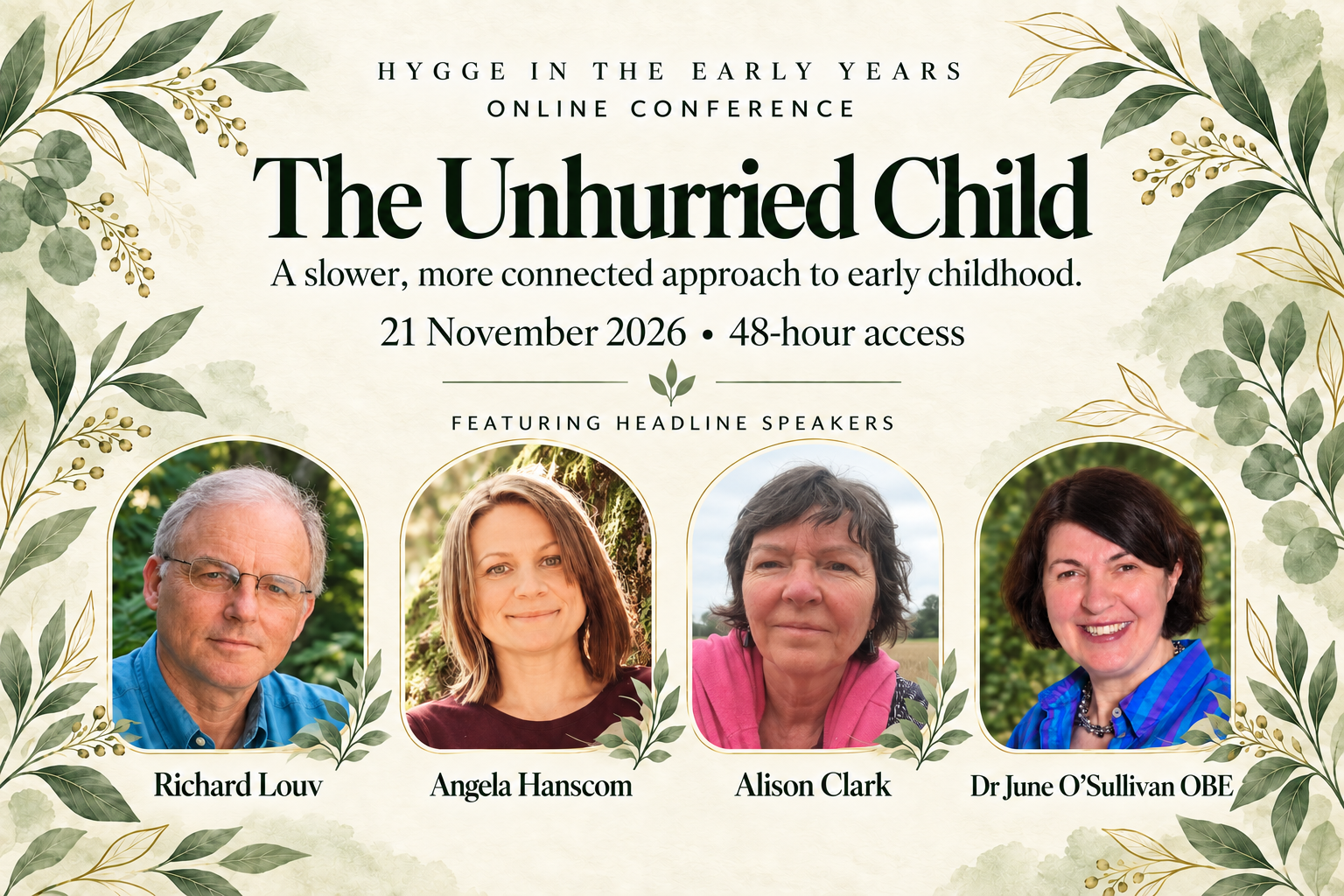
Online Conference
Online Conference
Curious about slow pedagogy?
”The Unhurried Child"
21st November 2026 (48 hour access)
A slower, more connected whole child approach to early childhood.
One inspiring online conference for educators ready to protect play, nurture wellbeing and give childhood back it's time.
