
Blog
A calmer way to teach, lead and nurture childhood.
Practical ideas, reflective insights and nature-led inspiration for educators who want to do less — and do it more meaningfully.
Start here if...
50 Outdoor Play Activities this Autumn

Autumn is one of the most beautiful times of year.
Here we share 50 play activities for you to get inspiration from. Some wonderful ideas for your left over pumpkins too - not just for Halloween!
You can also find weekly nature planning ideas and invitations to play in my Rewilding Nature Study Programme
A Gentle Reminder Before You Begin 🌿
It can be tempting to look at a long list of activities and feel like you should do them all. But the Hygge approach is about slowing down, not speeding up.
Children don’t need a packed timetable. What they need is:
-
Experiences linked to their current skills (what they are practising right now).
-
Play that reflects their interests (what lights them up and holds their attention).
-
Learning that grows from what we already know about them as individuals.
✨ Instead of rushing through all 50 ideas, choose just a few as seasonal hooks. Perhaps puddle jumping, conkers, or pumpkins. Offer these gently over the season, observe where t...
Autumn Leaves and Conkers Please - Conker Activities

Autumn Leaves and Conkers Please - Conker Activities from Gemma's Childminding, a Hygge Accredited setting.
'We love to incorporate natural, eco-friendly and recycled products into our play. Our activities are very much child-led these days rather than adult-initiated. I find that being around nature whether this is outdoors or bringing nature indoors really supports the children's learning and wellbeing.
I've noticed some real changes in the children since adapting to a more 'Hygge' based environment and embracing a slow pedagogy.
Some snapshots of how we have enjoyed incorporating conkers into our everyday play this season.'
Woodland Theme Autumn Display

We set up a small display of interest for the children to explore. Lots of natural resources including conkers, pinecones and leaves. We incorporated various lights and some magnifying boxes for them to identify the different textures and colours up close.
They especially loved feeding the conkers to the woodland animals.
Pl...
20 Hygge Nature Crafts for Children

🌿 Feeling overwhelmed by the pressure to constantly plan activities?
What if children didn't need more activities, but more time to wonder, explore and simply be?
In my FREE 30-minute training, I'll share the three simple Scandinavian-inspired shifts that helped me create calmer days, happier children and a more joyful way of teaching.
✨ Watch the free training here.
Perhaps it's because as a teacher, summer felt like a chance to finally breathe. Or perhaps it's because some of my happiest childhood memories happened outdoors, with very little planned at all.
I remember long days building dens, making potions from flowers and spending hours outside until someone called me in for tea. Nobody worried about whether the activity was educational. Nobody had printed a worksheet. We were simply allowed to be children.
Now, as a mum to Oliver, I find myself wanting the same thing for him. We lean towards the Scandinavian summers we've experienced (Read more about that here)
Not a summer...
8 Play Ideas with Dandelions

Dandelions are beautiful, fascinating plants! Attracting Bees and little hands a like. There is nothing sweeter than blowing a dandelion clock and making a wish! They're known for their bright yellow flowers that turn into fluffy, white seed heads. Despite being considered weeds by many, they have several interesting characteristics. For example, their seeds are dispersed by the wind, which is why you often see them popping up in unexpected places. Additionally, dandelion greens are edible and nutritious, containing vitamins A, C, and K, as well as calcium, iron, and potassium. Some people even use dandelion roots to make tea or coffee alternatives. Overall, they're resilient and adaptable plants that have found their way into folklore, cuisine, and even herbal medicine.
-
Dandelion Biscuits
Baking together is a lovely activity, working together and sharing what you have made.
-
Dandelion Playdough
Add dandelions to your homemade playdough mix for a spring dough.
-
Loose Parts
...
Wh
Play Based Learning This Easter
With Easter upon us shortly it's easy to get back into the habit of dressing each area of provision for the celebration.
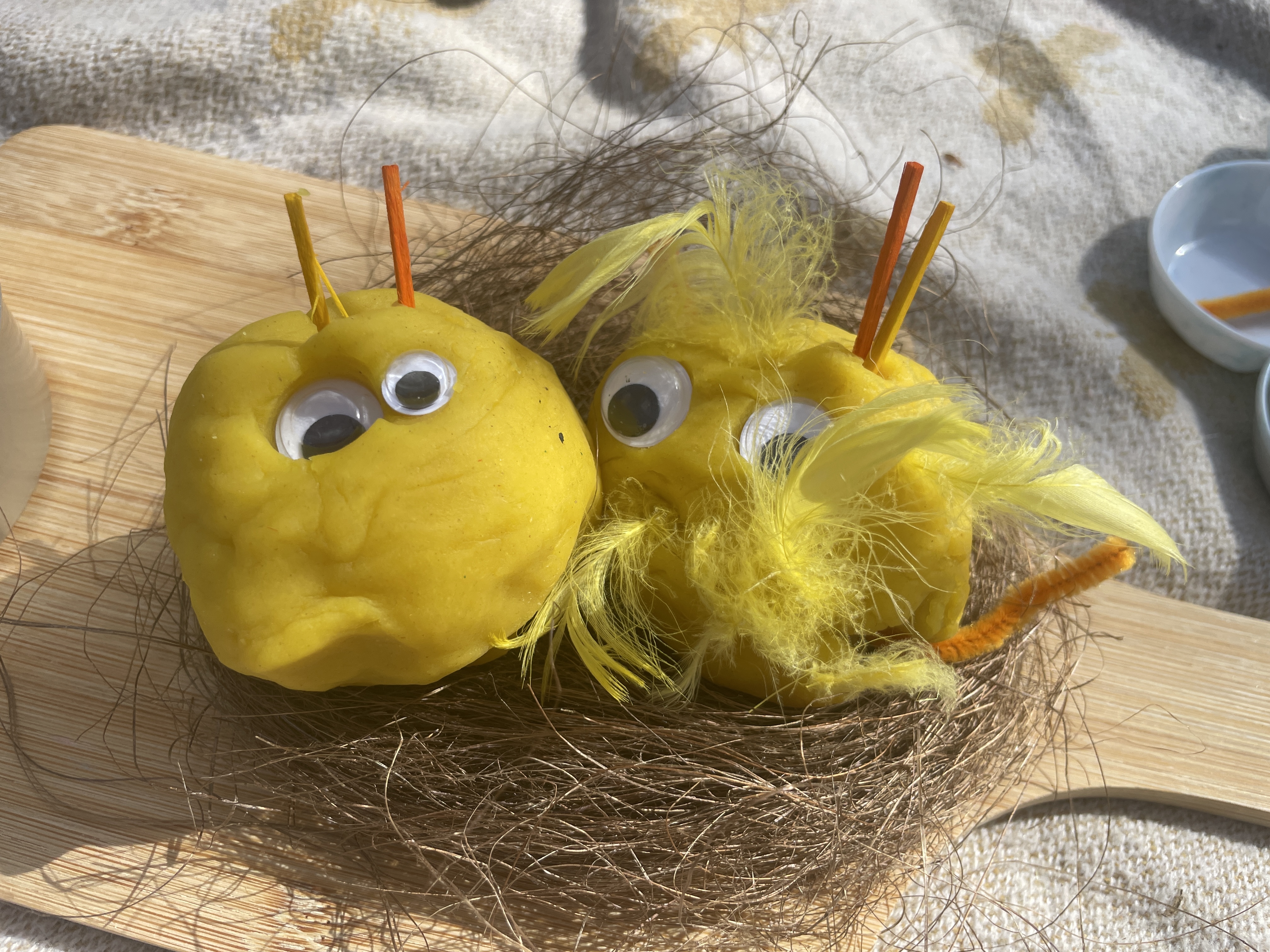
Instead focus on leaving a few hooks in your adult initiated sessions that will grab your children's interest and lead them curious to know more. It could be sharing an Easter story for instance and then having one or two areas of your provision with provocations in linked to this. This then invites the child to explore and learn more. It also means that children that don't want to explore this can still head into the areas of provision to develop their own lines of enquiry or take the lead on their own child led play.
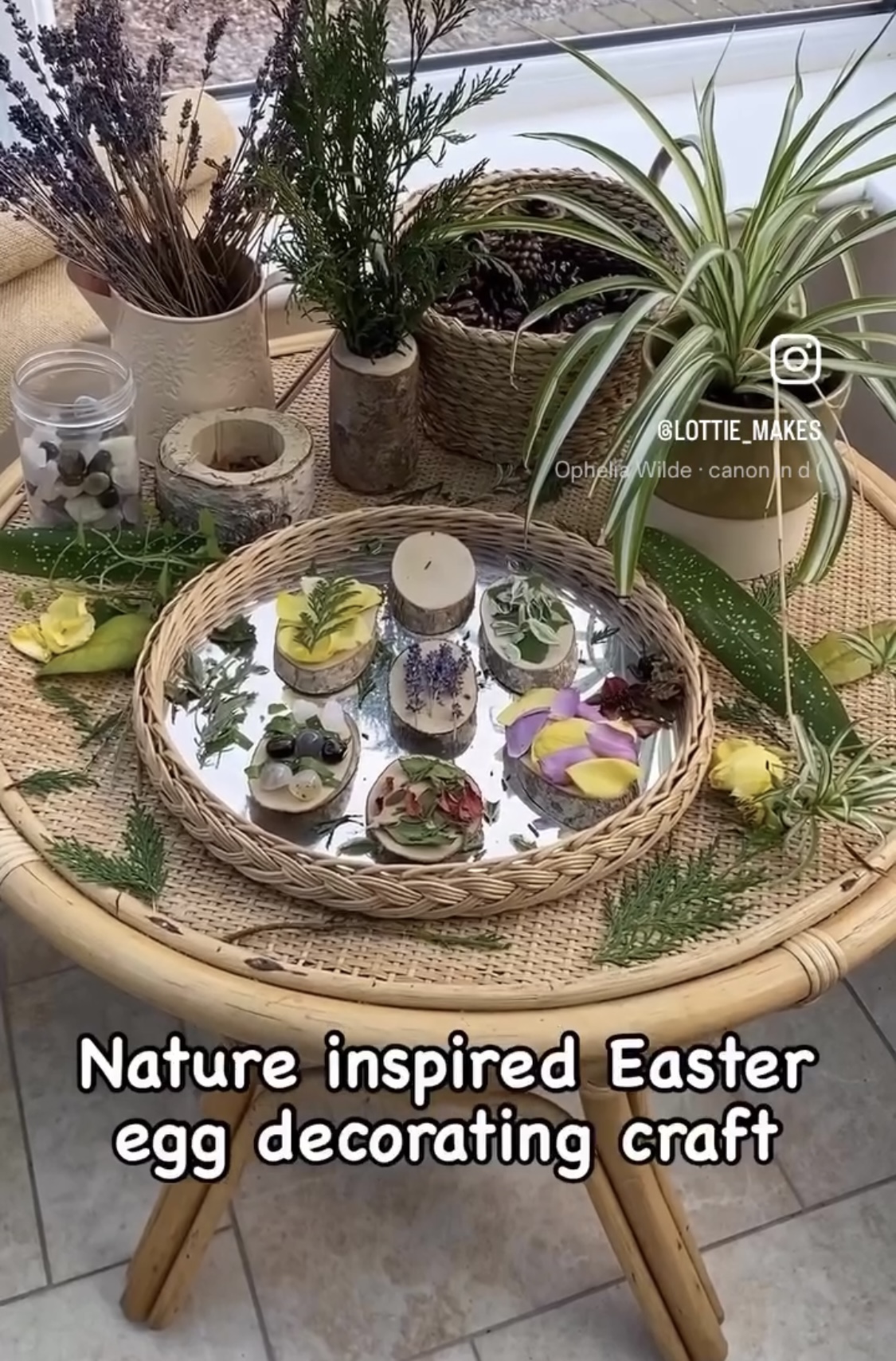
Taking this approach also frees you as an adult up from spending so much time filling every area of provision with resources and instead can really prioritise your time and focus your efforts on the things that will make the biggest impact.
With this in mind I wanted to take the opportunity to share some of the provocations and hooks that I h...
Exploring Elderflowers

The beautiful white, frothy elderflowers tend to bloom in late May, turning to

Here are a few activities to explore:
- Make delicious elderflower cordial or gin!
- Add them to cakes or biscuits
- Try them deep-fried to make tasty elderflower fritters
- Make elderflower jam
- Add them to homemade Playdough
- Add them to your mud kitchen and potions
- Paint Elderflowers using a cotton bud to create a spray of white flowers - or splatter the paint to see what effect you get.
Find out more about Hygge in the Early Years here.
10 Ideas for Ladybird Nature Play

Ladybirds are a beloved and valuable part of our natural world. It is lovely to find them in the garden or out and about in parks.

Some interesting facts about Ladybugs:
-
From the beetle family.
-
Common colors include red, yellow, and orange with black spots, but some species can be black with red or yellow spots.
-
There are about 5,000 species of ladybirds worldwide.
-
The seven-spot ladybird is one of the most familiar species in Europe.
-
The bright colors and spots of ladybirds serve as a warning to predators that they are toxic or distasteful.
-
When threatened, ladybirds can secrete a yellowish fluid from their leg joints, which has a foul taste and can deter predators.
-
Ladybirds are essential for natural pest control in gardens and agricultural fields, helping to reduce the need for chemical pesticides.
-
Ladybirds are often considered symbols of good luck and are associated with various folk beliefs and superstitions around the world.
Guest Blog Post: Transition

This guest blog has been written by Colette Hearity a mixed EYFS KS1 teacher. Colette completed her PGCE at Edge Hill University and has worked across key stages throughout her teaching career, although her true passion is within the Early Years Foundation Stage.
She recently completed the NaSENCO Award and currently leads Early years SEND, Science, History and Spanish in her school.
You can follow her @eyfsearlyyearsideas
The Truth behind Transition
As us teachers are dragging ourselves through the final few weeks of term the thought of transitions should be at the forefront of all our minds.
It is vital that we make this time in children’s academic journey as smooth as possible, especially as lots of children find the step up from Early Years into Key Stage 1 so daunting.
But why is this?
Whether it’s due to the jump in expectations, the more formalised learning or just no longer believing they are, ‘playing all day’ children’s wellbeing after joining KS1 and beginning the rigo...
8 Spring Blossom Play Ideas!
The blossom is in full bloom here and so I wanted to share some of the best ways you can bring it into the children's play.
'The significance of the cherry blossom tree in Japanese culture goes back hundreds of years. In their country, the cherry blossom represents the fragility and the beauty of life. It's a reminder that life is almost overwhelmingly beautiful but that it is also tragically short. '
Homaro Cantu

Don't be too busy to rush past the blossom trees but instead let them be a remind that life is short but beautiful and to look up and notice them.
1. Look up
Look up at the blossom and see all of it's beauty. If possible go and lay under a blossom tree with the children and practice a moment of stillness. What do the children see, smell, hear and feel? Why not place a perspex mirror under the tree or some water play (always supervise) to reflect the blossom and provide an interesting perspective in the play.
It's also a wonderful sensory experience to take your shoe...
Easter in Denmark

Easter is big in Denmark. It kicks off the summer season after a long, dull Nordic winter, and the Danes go all in for it. a
For Danes Easter means being together with loved ones, relaxing and having fun making new memories.

Here are a few ways Danes celebrate Easter.
Decorate the Home
Like everywhere else in the world, the egg is a major symbol of Easter, also in Denmark. It symbolizes new life and a new beginning. For decoration using egg shells, you can blow out your own egg by making a tiny hole at the bottom and top with a needle. You might decorate some hard boiled eggs and have them on the side to admire. You could collect some twigs from your garden and hang home made salt dough decorations on them too.

Spring flowers are also collected and displayed inside the home to embrace the element of nature.
Get Together
During Easter, Danes celebrate mostly the arrival of springtime and with Maundy Thursday, Good Friday, Easter Sunday and Easter Monday being national holida...
Online Conference
Online Conference
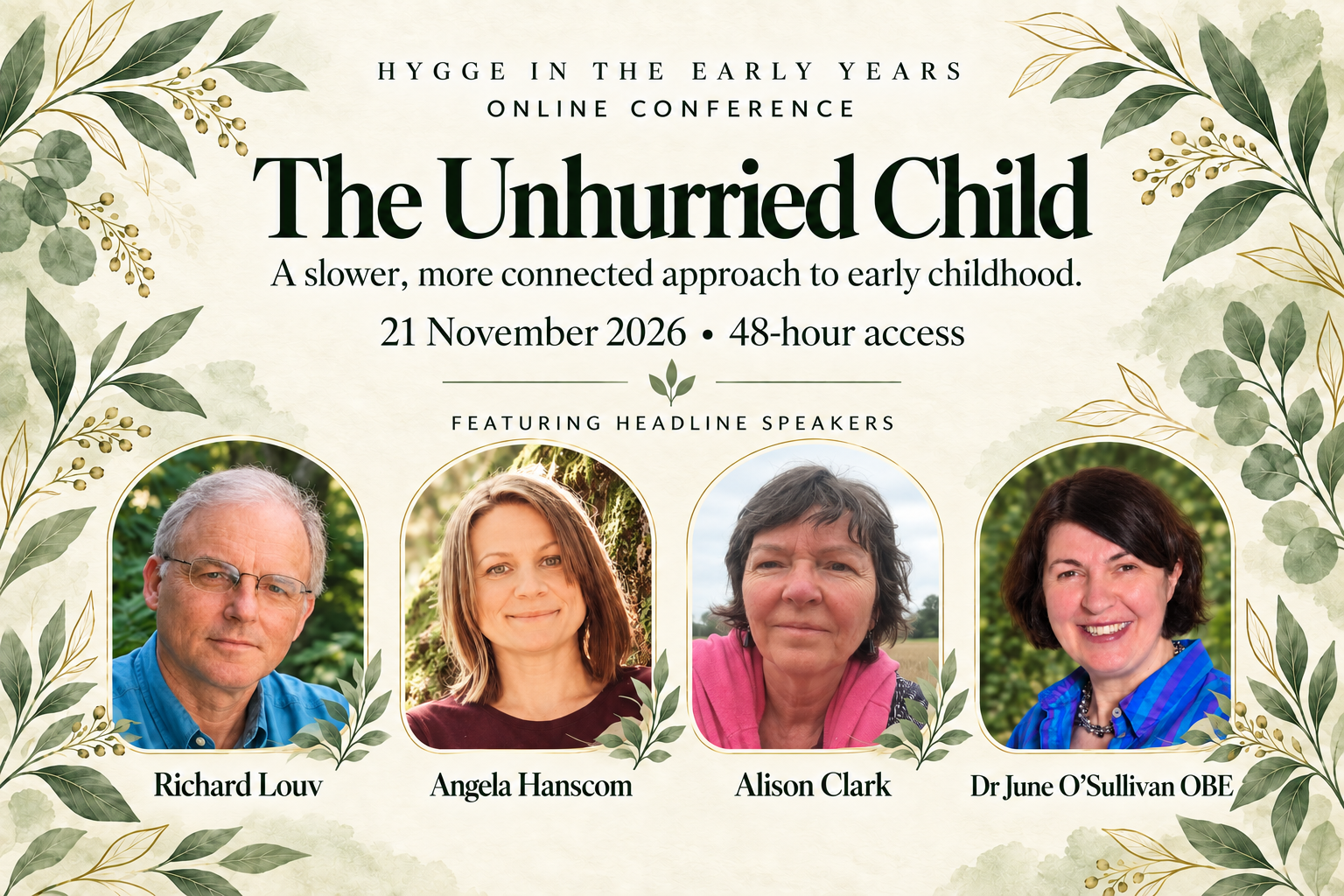
Curious about slow pedagogy?
”The Unhurried Child"
21st November 2026 (48 hour access)
A slower, more connected whole child approach to early childhood.
One inspiring online conference for educators ready to protect play, nurture wellbeing and give childhood back it's time.
