
Blog
A calmer way to teach, lead and nurture childhood.
Practical ideas, reflective insights and nature-led inspiration for educators who want to do less — and do it more meaningfully.
Start here if...
Slow Pedagogy in Action
The Hole Punch That Reminded Me What Learning Really Looks Like
This week, a child became completely fascinated by a hole punch.
Not a new resource.
Not an expensive invitation to play.
Not a carefully planned activity.
Just a simple hole punch sitting on a table.
And for the next 30 minutes, they were utterly absorbed.
Punch.
Click.
A tiny circle falls.
Punch.
Click.
Another circle appears.
Again.
And again.
And again.
Watching them, I was reminded of something I think we've forgotten in early years education.
The deepest learning often doesn't happen in the activities we've planned.
It happens in the moments children choose for themselves.
Why We Struggle to Trust These Moments
I'll be honest.
Twenty years ago, I probably wouldn't have trusted this kind of play.
I'd have worried that I needed to move the child on.
Extend the learning.
Introduce a challenge.
Find a "next step."
After all, that's what many of us were taught to do.
Yet after more than 20 years...

"If children feel safe, they can take risks, ask questions, make mistakes, learn to trust, share their feelings, and grow.” Alfie Kohn
In the Reggio inspired approach there is lots of work to be done on developing our own image of the child and discovering what it is about each individual that makes them capable learners. Our own experiences as children, parents and educators shape what this can be and it's important to recognise the strengths and capabilities our individual children have.
I believe that young children are capable of high levels of engagement in their learning. But how can they show this if i'm always the one deciding what we should do around the agenda I have as an adult? Doing this sets them up to fail.
Therefore my understanding of the child must be backed up by the practice and environment I create. This can be done by really listening to the child and exploring the curiosities they have and discover what drives them to know more.
This can be done by identify...
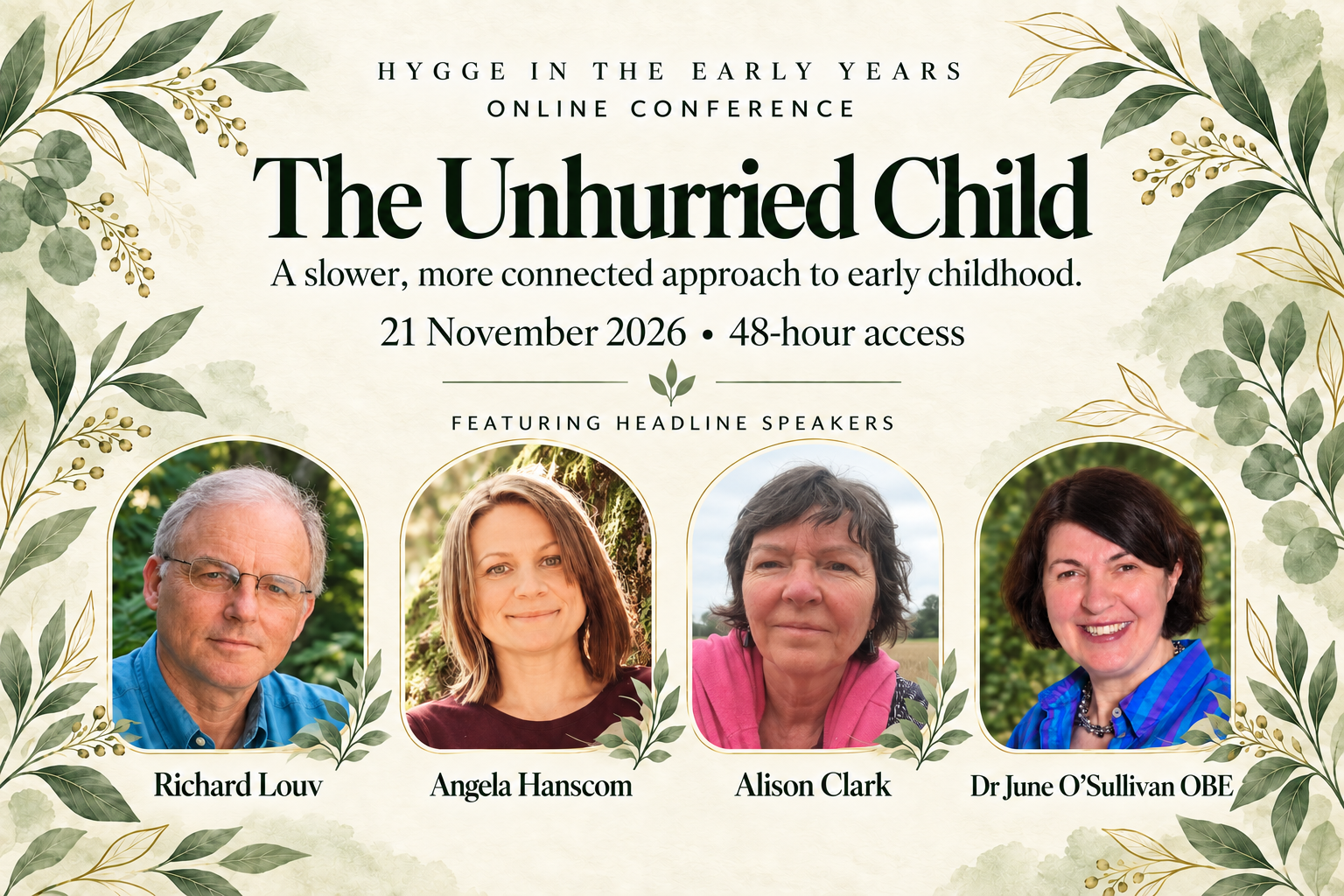
Online Conference
Online Conference
Curious about slow pedagogy?
”The Unhurried Child"
21st November 2026 (48 hour access)
A slower, more connected whole child approach to early childhood.
One inspiring online conference for educators ready to protect play, nurture wellbeing and give childhood back it's time.
