
Blog
A calmer way to teach, lead and nurture childhood.
Practical ideas, reflective insights and nature-led inspiration for educators who want to do less — and do it more meaningfully.
Start here if...
Autumn Tinker Tray Ideas

What is a tinker tray?
Tinker trays are filled with open ended loose part materials that will spark curiosity, problem solving, critical thinking and imaginative play. The objects in the tray can be used in any way the child chooses and there is no set way that they should be used. It is commonly used in the Reggio Emilia Approach to learning and can be adapted for a range of different ages and stages of development.

Materials for a tinker tray
Any tray with compartments can be used to display and store the loose parts to be used in play. I quite like using trays made out of natural materials like wood and seagrass as i always think we can display our materials in a beautiful way in these. Here are some ideas of what you could use or re-use:
- A cutlery tray insert
- A chocolate box or biscuit box insert
- Bun trays
- Tie box
- Jewellery tray insert
- Desk drawer dividers
- Tool boxes
- Crafting boxes
- Ice cube trays
- A tea bag caddy

Items ideas for your tinker tray:
We can creat...
Simple Autumn Leaf Play
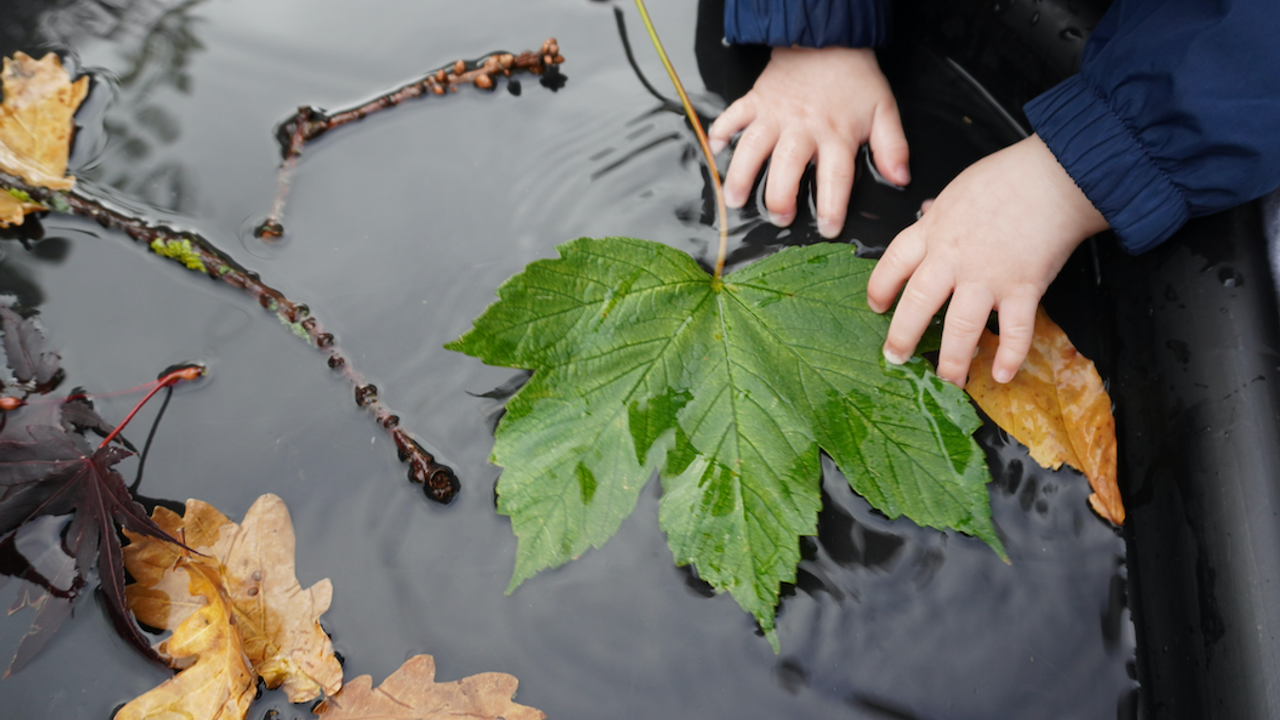
Autumn time has to be one of my favourite times of the year. Having Oliver now makes it even more exciting too as I take a moment to stand back and watch him experience everything.
We have loved getting outside each day and doing a daily walk. Talking about all the things we notice each day and notice any changes. Doing this is very much inspired by the practice of the Danes with the daily walk children in early education do. We stop at our favourite tree as well to document its changes as we move through the year.
I also think it's important that we as adults take the time to just pause and appreciate the slow moments of joy in the day. We can't teach hygge and living well if we don't model it ourselves. I've built this into our daily walk and we will often find a little spot to just sit and watch what's going on.
On our walk yesterday we took great enjoyment in collecting up some of the fallen leaves and twigs. We then brought these back and I popped them in some water in our tu...
Create an Autumn Nature Shelf
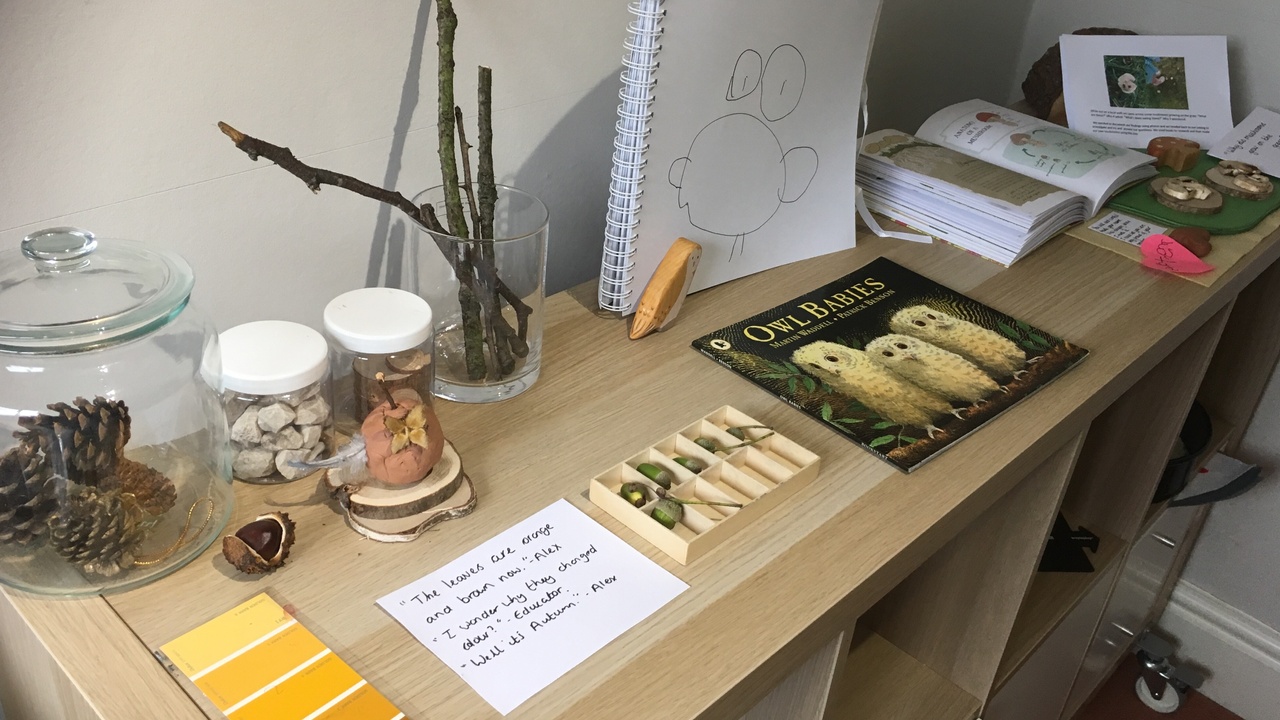
Setting up a seasonal space in your setting gives children the opportunity to connect with nature and deepen their understanding. Helping them also to be more present about the world around them and develop a love for nature.
Where to set up the nature shelf?
The nature shelf doesn't need to take up a huge amount of space in your setting. I have seen it be successfully implemented on a small window sill. It could be on a table, inside an up turned crate, a shelf on the wall or an a shelving unit.

I like to position it in an area that flows between inside and out that offers that natural connection with the outdoors. If you have families visiting the setting too with their children consider where would be a nice space for them to pause and talk about what they can see?

What can I put on my nature shelf?
I like to include a range of open ended materials that young children can connect with. I also invite children and their families to contribute to this when they make an excit...
Embracing Hygge at The Flower Cottage this Autumn Season 🍁

Embracing Hygge at The Flower Cottage this Autumn season 🍁

Hygge in the Early Years member Caitlin, from The Flower Cottage Childminding has recently given her setting a wonderful autumn makeover. Giving us all the Autumn feels! We couldn't help but fall in love as it is so inspiring.
We asked Caitlin if she would share with us some of the hygge activities in her setting:
Noticing changes as we transition from Summer to Autumn, observing the colours transitioning, watching the leaves fall and finding hidden treasures outdoors that can be brought into our indoor play 🍂

Melting pumpkin spice wax melts in our burner on a morning and simply enjoying a lovely storybook as a group, cuddled in blankets and cosy jumpers.

Enjoying slow learning in our play spaces filled with twinkle lights, flickering candles and nooks of light from lamps, following the child’s lead but always being there on hand in time of need.

Enabling and encouraging children to reach their next hurdle and pr...
Openwoodgate Preschool - Our Hygge Journey

Hygge in summertime is not that different to hygge in Autumn or wintertime. I was inspired to continue our Hygge journey over the summer holidays even though our setting is term time only.
Here are my top 10 ideas for creating inspiring Hygge activities for your little ones...
1. Sunflower Soup

A super quick and easy water play activity requiring very little set up.
All you need is a large pot full of water (i like to colour my water), bowls, spoons, sunflowers (I tend to use ones that are almost past their best) and any other added extras you like! (Pipets are always fun and good for fine motor development)
2. Ice play

Sticking with the water theme and with the British summer being a bit unpredictable you have to grab these hot days when you can! And what better way to cool off than with an ice play activity?
All you need is a couple of things...
Ice (make sure to freeze the day before if doing a large volume), cutlery, pots and pans! You can add in coloured water, flow...
How To Flourish This Autumn with Hygge in the Early Years

How to flourish this Autumn with Hygge in the Early Years...
As the leaves become crunchy underfoot here are a few simple ways to enjoy Autumn.
 Batch cook some delicious meals
 Take a woodland walk
 Create some natural displays in your home and setting with pumpkins, squash, twigs, pine cones and acorns.
 Make a blackberry crumble Hang an autumn wreath on your door at home and setting Fill jars with autumn leaves and fairy lights
 Make a gratitude list and be thankful for the moments and things you have
 Set up a seasonal small world scene of your local area Add seasonal items and books to your nature shelf
For more seasonal ideas see my Re-Wilding your Wanderlust Child Nature Study Programme
Some books to inspire you:


How to create your own rock pool

Create your own rock pool in your setting to explore. This is one of the ideas shared in my Rewilding Wanderlust Nature Study Programme.

You will need;
-
sensory tray (any tray will do)
-
sand
-
pebbles
-
shells
-
sea creatures - paint rocks if you don't have any

You can lay out the items required for the children to create it themselves or do it as a collaborative task.
1. Simply add sand to your tray creating a circular space in the middle to pour your water
2. Add pebbles

3. Add water to the centre where there is no sand. The water will soak into the sand surrounding but this is totally natural.
4. Add shells

5. Add some sea creatures or perhaps children could make some rock painted crabs or fish to add?
We added blue food colouring to the water to give it a more blue ocean colour but you don't have to.

Tag me on socials if you give this a go.
Find out more about my courses on my website.
How to Create a Hygge Welcome at your Setting

Welcome is a key word for our Early Years environments, as we welcome new parents and children to our settings and establish routines. Our practitioners continue to reflect upon how welcoming their entrances are to parents and children. Here are a few examples from last year.
The entrance to Nursery at Spring Lane Primary School

The entrance doors to Reception at Bourton Meadow Academy

The entrance to Nursery at George Grenville Academy

Part of the entrance display for Nursery at Lace Hill Academy

A welcome display for Reception at Lumbertubs Primary School

Our welcoming environments were inspired by a Hygge approach.
What is a Hygge approach?
Building a sense of togetherness between home and school reflects a Hygge approach. It is so important to us.
Positive relationships and the happiness of our parents and children are strongly linked.
Campfire Education Trust schools have worked hard to ensure that all our new starters feel a sense ofbelonging as soon as they e...
5 Simple Lavender Activities

Lavender is a versatile herb with numerous properties beneficial to health, wellness, and everyday life. Its calming aroma, therapeutic benefits, culinary uses, and role in personal care and household products make it a valuable and widely appreciated plant.

Lavender can be grown from seed and is a great sensory ingredient to explore. It attracts pollinators like bees and butterflies, making it a beneficial plant for your garden. Add it to playdough, potions, make lavender perfume or dry it and add sachets to your room indoors to create a beautiful calming scent. Lavender oil has antiseptic and anti-inflammatory properties, making it useful for treating minor burns, insect bites, and skin irritations. You can also use it in cooking and natural cleaning products. Lavender has a calming effect, relaxing you, aiding sleep and reducing stress and anxiety.
Sweden Part 1
We’ve just got back from a wonderful few days in Sweden. We stayed at a couple of different places; a treehouse on a farm called @traktforesthotel and a water chalet on a lake at a Swedish vineyard.
We flew Manchester to Gothenburg and then hired a Volvo.
We took a two hourish drive into the countryside to stay at Trakt Forest Hotel. Along the way we passed so many roadside wildflowers. In particular the foxgloves lining the roads along with the Cow Parsley was very pretty!
When we arrived at the Trakt Forest Hotel we checked into one of five tree houses built on the farm. These were so peaceful up in the forest and felt very private and not overlooked. There were a number of different experiences you could tag onto your stay. We added the outdoor sauna to ours. You could kayak at a local lake or take a forest bath. They all sounded wonderful but unfortunately time didn’t allow us to do all.
Our treehouse was beautifully designed and made. With all the interiors created b...
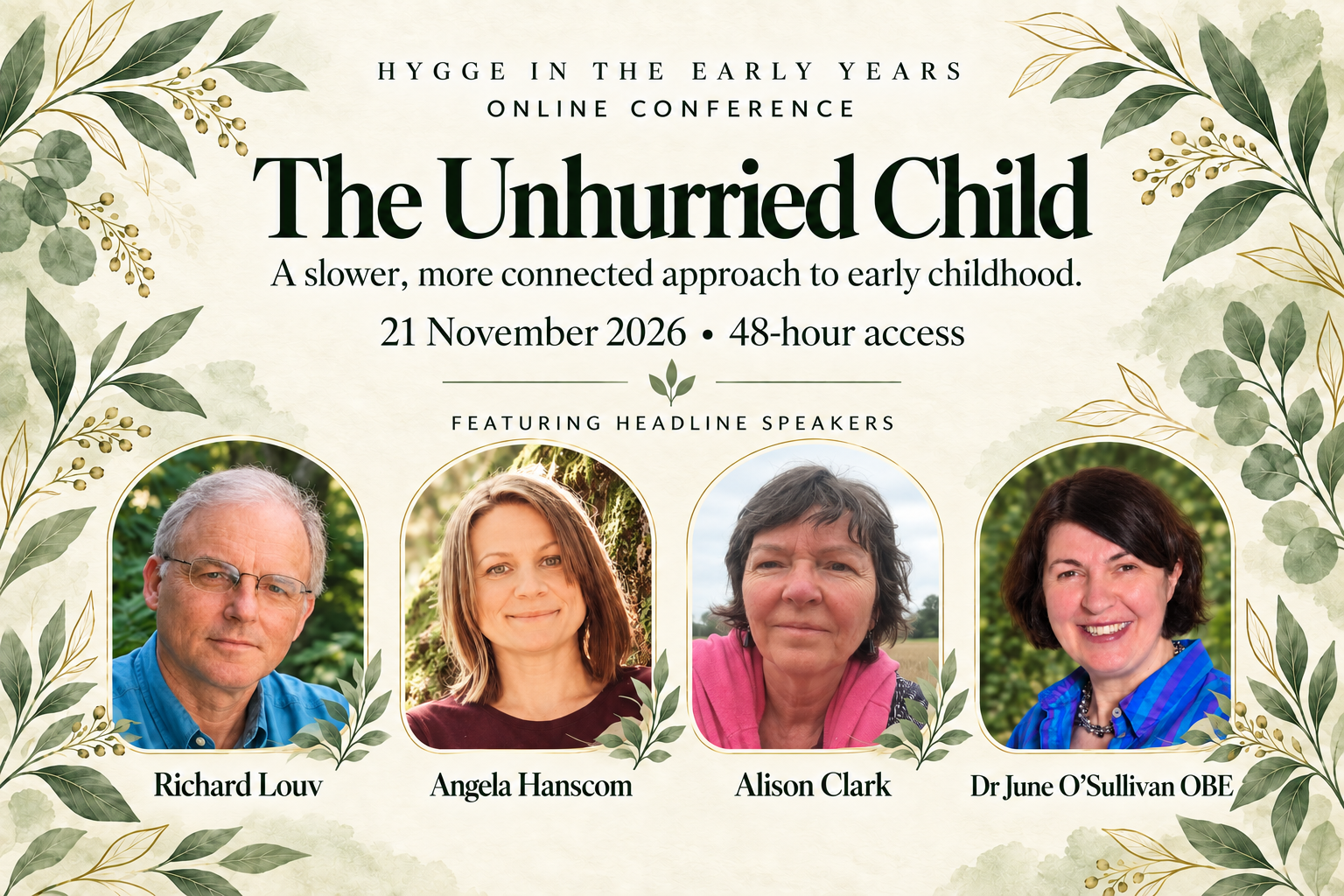
Online Conference
Online Conference
Curious about slow pedagogy?
”The Unhurried Child"
21st November 2026 (48 hour access)
A slower, more connected whole child approach to early childhood.
One inspiring online conference for educators ready to protect play, nurture wellbeing and give childhood back it's time.
